Tuesday, March 15, 2022

Reflecting on Board Game Geek's Top 20 Strategy Games List (2022 Edition)

 Wow... So, over six years ago, I wrote a brief article reflecting on Board Game Geek's Top 20 Strategy Games list. At the time, Twilight Struggle had been dethroned by Pandemic: Legacy as the number 1 game, and many other upstarts had infiltrated the list. This time, I'm going to comment on each game. I have not yet played many of them, so my comments shall be steeped in hearsay, a modicum of ignorance, and some degree of snarkiness. Here goes...

1) Gloomhaven: this one is too large, too expansive, and too expensive for me to consider. I own enough games to dissuade me from purchasing this because I want to play the games I own. If I only owned, say, 10 games, though, I'd buy this one. I buy into the hype that this faux dungeon crawler is the best game of its kind.

2) Brass: Birmingham: this one looks like a lot of fun - a real brain burner. Unfortunately, I would have very few people interested in playing this one with me.

3) Pandemic Legacy: meh. I like Pandemic, and I loathe games that require me to deface or destroy components. That's my opinion, and I'm in the United States, where speech is still (somewhat) free.

4) Twilight Imperium, Fourth Edition: like Gloomhaven, I have too many games to justify this purchase, but, boy, am I tempted! Besides, I own Star Trek: Ascendancy, and I have yet to bring that to the table.

5) Gloomhaven: Jaws of the Lion: very tempting! More condensed Gloomhaven at $40? That's a bargain.

6) Terraforming Mars: ugly card art is very dissuasive. Ares Expedition was a huge improvement in that regard, but I have enough card-driven world builders to cause me to pass on this one.

7) Gaia Project: this one is hugely tempting. Sadly, I have few opponents to play this one and it's a bit too abstract (with a pasted-on theme) to consider it.

8) Through the Ages: I own Nations and like how civilization building is condensed to three hours. If I had the 4-6 hours to play one game, I'd think about Through the Ages.

9) Great Western Trail: I own this one. It's a keeper and strongly recommended - a blend of deck-building (though not primarily so), hand management, point-to-point movement, and (dare I say) racing (at least in the latter part of the game). This is in the right spot on the list.

10) Spirit Island: I don't know much about it except the theme, which didn't excite me. Moving on.

11) Twilight Struggle: it should be top 5, period. Read any review about it and you'll read why.

12) Dune: Imperium: I own this and its expansion (Rise of Ix). It's super fun as a SOLO game, and I can't wait to play it with people. I also can't stop buying third-party components to beautify it. I'm not sure if it should be 11 on this list; it's definitely top 30.

13) Scythe: it masquerades as a "dudes on a map" game, but it boils down to efficiency and resource management. The first 15 turns feel slow and deliberate, but things can escalate quickly. The theme is gorgeous, but somewhat pasted on. I own this and two of its expansions. Scythe could be top 8.

14) Brass: Lancashire: looks awesome; seems deliciously complex. Once again, though, I don't have an audience for this one.

15) Castles of Burgundy: what can be said about this one? I own and love it, even though it's as ugly as other games from its time. Stefan Feld performed some serious alchemy to create this gem.

16) Eclipse: Second Dawn of the Galaxy: if this were even possible to acquire at a decent price in the U.S., I'd break my own acquisition guidelines and buy it! The second iteration is lovely and the game trays look stellar (pun intended)! It's shorter and more Euro-like than Twilight Imperium.

17) A Feast for Odin: I'd love to acquire this one, but I have vowed to sell another Uwe Rosenberg game before I purchase a new one. Hmm... I still think Glass Road is Rosenberg's masterpiece.

18) Concordia: if it weren't for having to "seek the favor of gods," I'd jump at this one. It replaces a few games on my shelf, conceivably. (Update: upon further examination, I chose to buy this one. The "seeking the favor of the gods" aspect is nothing but set collection. No worshiping here.)

19) Terra Mystica: I don't like the theme, and I'd rather get Gaia Project, anyway.

20) 7 Wonders Duel: I may be ignorant about this one, but really?! It's number 20 on the Strategy list?

The also-rans at 21-25 include Orleans, Wingspan, Barrage, Food Chain Magnate, and Viticulture - all great titles to be sure. I wouldn't put Wingspan so high up on the Strategy list, but I can definitely declare that it's one of my personal top 15 games. Also, Food Chain Magnate should be much higher, maybe top 10; because it's somewhat expensive for what you get (the art, though cute and cheeky, doesn't justify the cost) and not easy to acquire, I'm sure many folks have not had a chance to play. Like an independent dramatic film that receives an Oscar nomination, only a small market has truly gotten to appreciate it.

Here are a few more thoughts I have about other games on the list:

  • Lost Ruins of Arnak is an awesomely designed and beautiful game, but it shouldn't be on the Strategy list at 28.
  • Caverna is at 35 and Agricola is at 43... Way too low for either title.
  • Puerto Rico is a personal favorite, and I have no problem with it at 39. It hasn't aged that well; there are many more excellent strategy games.
  • Tzolk'in is at 46, but should be higher. It's a worker placement game that rewards patience; you pull your workers too early and you miss out on better goods or benefits. Plus, you have to think turns ahead to anticipate when you would need those better items.
  • Le Havre should be higher up the list than 49, though some have said that it's a solved game (steel strategy?)
  • Power Grid at 51... Hmm, sure.
  • Mombasa (at 66) has slid down about 30 places compared to a few years ago, but (outside of the theme) this game is a gem.
  • I'm willing to accept 7 Wonders at 73 on this list. It's my go-to Next Step game.
  • Isn't Trajan just too clunky (compared to games now) to be at 80?
  • Wow, Watergate is at 95...
  • Glass Road, Lewis & Clark, and Robinson Crusoe belong in the top 100.
  • Two-player Carcassonne with the base set only is supremely strategic; it would be top 20 easy.

That's it for my opinions. What are your thoughts?

Saturday, December 18, 2021

Trash or Treasure? #1: Ticket to Ride

This article is the first in a series of Trash or Treasure articles that explore connoisseur board games from the not-so-distant past that were once innovative, but now have receded into "classic" status as subsequent games have been designed and refined over time based on those past innovations. 

For many board game enthusiasts, Ticket to Ride was the gateway game that led them into the hobby. With a bit of hand management, some set collection, and a lot of route building, Ticket to Ride brought something to the table that American games like Monopoly, Sorry, or even Clue could not do: introduce a stronger sense of agency by not using dice. 

For those of you who are not familiar with Ticket to Ride, the base game has a map of the continental United States with cities connected by routes comprised of colored (or gray) rectangles. Each player starts with 45 plastic train pieces, four train cards of various colors, and one to three "destination tickets," which players are required to finish lest they lose game points. During a turn, each player has three choices: draw two cards from the river (five face-up cards in a row) or deck (or one wild card locomotive from the river); play a color set of cards to put train pieces between two cities to complete a route; or, draw three more destination tickets, keeping at least one.

As the game progresses, players accumulate cards, complete connections (which yields points depending on how many train pieces are required to finish the route), and work towards completion of their destination tickets; for instance, one destination ticket might require a player to connect Los Angeles to New York. The game ends when one player has only three or fewer train pieces remaining in his or her inventory; at that point, every other player gets one last turn. Then, the points from completed destination tickets are added to one's total, and points are subtracted for every ticket that is not completed. The highest scoring player wins.

Unlike popular pariah Monopoly (which tends to be despised by numerous board game hobbyists), Ticket to Ride does not rely on dice for movement (though randomness is an integral part of the game). Sure, Ticket to Ride involves a "river" of five cards that appear randomly from a deck, but players get to choose which cards to take and routes to build. Randomness still prevails, not only in the form of the card draw, but also in the destination tickets each player draws; yet, each player can go in the directions they want to go. As a beginner, players can focus on completing destination tickets; the more experience one gains, the more one may attempt to block their opponents from finishing their tickets. The more one plays, the more cutthroat strategies present themselves; as with many games, players benefit from experience, but with the level of randomness present in the game, any beginner has a chance to steal a victory, especially if they grok the game's intricacies quickly. In other words, unlike the dice mavens among classic American board games, Ticket to Ride provides a decision space that allows for a play style and an approach.

Since Ticket to Ride emerged in 2006, it has been one of the quintessential starter games: easy to learn, but with enough deeper strategy to suggest that there is more to board games than rolling and moving. In 2010, Ticket to Ride (and Pandemic) was my gateway into the hobby. However, since that time, thousands of games have been created. Many would argue that there are route-building, card drafting, and/or set collection games that implement those mechanics better or in more intriguing ways than Ticket to Ride. 

Should I trash or treasure Ticket to Ride?

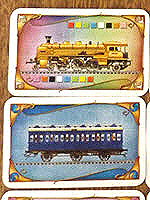
At its weight (1.85 out of 5, according to Board Game Geek), I contend that there is no game that combines card drafting, route building and set collection more simply and elegantly than Ticket to Ride. There are some excellent heavier games like Power Grid and Brass that have implemented route building well, and there are an innumerable amount of games that involve drafting and set collection, but Ticket to Ride is the one that anyone can use as a launchpad into those more complex games. Even more important that that, Ticket to Ride is a gorgeous production from Days of Wonder, which has proven to be a brand that emphasizes art and beauty, even at the expense of game design (especially in their more recent designs as of late 2021), and Ticket to Ride is no exception. It's pretty to behold, the maps are fascinating with their little artsy flourishes, and every card is intricately drawn with steampunk Victorian inspiration. Ticket to Ride truly represents the best of gateway game design and execution.

I have been tempted to sell Ticket to Ride because I own 70 other games that I want to play at any given time. Yet, if I'm hosting guests and they are relatively new to hobby board gaming, Ticket to Ride is one of those staples that I am happy to present to those guests. Admittedly, I sold my base Ticket to Ride in favor of buying Ticket to Ride Europe just to get stations, but I still own some form of Ticket to Ride. Thus, I treasure Ticket to Ride.

Should you trash or treasure Ticket to Ride?

If you own it, I strongly recommend treasuring it. Why not? Not all of your friends (I hope) are hobby gamers, so Ticket to Ride is invaluable for connecting with them.

If you don't own it, go buy it. Funnily enough, it can be found everywhere: in big-box stores like Target, online through Amazon, and even in the discount retail stores.

***

I really don't think there has been a true replacement for Ticket to Ride. You could convince me otherwise in the comments section, but it's a rare design that can only be imitated, not replaced.

Tuesday, October 5, 2021

Should You Scratch the Board Game Gem Purchase Itch?

Several weeks ago, I played a board game called The Lost Ruins of Arnak, published by Czech Games. A beautifully colorful mishmash of deck-building and worker placement mechanism, the game involves exploring a stereotypically tropical locale for tablets, gold, arrowheads, and rubies, all the while researching a lost civilization and encountering powerful guardians. Thematically, the game leans heavily on the Indiana Jones adventure trope; this is not a knock against the game, though... Despite the decidedly apparent Euro-game elements, the theme shone through the mechanisms and, along with the superior art, evoked the thrills of the adventures of the man with the whip and fedora.

As my time with the game concluded, I found myself pondering familiar thoughts, specifically the itch-till-it-is-scratched desire to purchase this gem of a game. Yet, two counterthoughts caused me to pause: one was the acknowledgment that I already own a game like this called Dune Imperium; the other thought was the gnawing feeling that I have many great games I rarely have time to play. Both thoughts bolstered each other like a world-class beach volleyball duo; one thought set the ball, and the other spiked it. In the past, my thoughts would dig out the spike, but this time I was thankful they did not.

If you do not follow the metaphor, I'll state it plainly: I have so many great games that the urge NOT to buy more games has become stronger. When I first became interested in hobby board games, I followed the trajectory of a new enthusiast in the spring of his hobby: every time I played a new game, I made it my business to purchase it (as well as some of its expansions). I started with the classic "gateway" games; in fact, my first game was Ticket to Ride, which is as quintessential a gateway game as it gets. Next, it was Carcassonne, Settlers of Canaan (not Catan), Pandemic, and Alhambra. Then, I used a list of the past Spiel des Jahres winners (one of the prestigious board game design awards) as my roadmap to guide my purchases. Fast-forward to now and I own some of the most highly-ranked games on Boardgamegeek.com. I do not say that to brag as much as to demonstrate that I have done much to build a reasonably sizable collection of 60-70 good-to-excellent board and card games.

I have been collecting and playing these connoisseur board games for over 10 years. I have sold some and kept many, but now I view my collection as replete with fine options that I have little impetus to expand. This is not to say that I do not enjoy them; quite the opposite, I enjoy all of them. Yet, when a new game is released, I remind myself that I must own a very similar game to that new one. For instance, when I encounter a game like The Lost Ruins of Arnak, I force myself to compare it to other games in my inventory. Considering my somewhat eclectic collection, I often find a game that approximates the new one. In this case, I own Dune Imperium, which, like The Lost Ruins of Arnak, is a deckbuilder with worker placement elements and a game board. Sure, the themes are markedly different (Indiana Jones exploration versus Landsraad conflict), but the mechanics feel close enough not to justify a purchase (for me, anyway).

...Or doesn't it? The internal conflict of many board gamers is whether to stratch that gem purchase itch or not. It's like any other hobby, I suppose: if you are interested in kayaking, for instance, you buy a starter kayak, then a kayak with more features, and then better paddles, a customized seat, a flashy life-vest, and other accoutrements. Soon enough, you realize that you no longer ride that old kayak or use those old paddles (oars?); they just sit on the shelf. For board gamers, though, the problem is compounded because (and this may be a novel idea for some) the old games were not really supplanted by the new games.

Think about it... Let's say you still own those classic gateway games. Did any game really replace Ticket to Ride? If you have a game that truly replaced the theme and mechanics of Ticket to Ride, why not sell or offload Ticket to Ride? Why keep both? If both games are different yet similar, what is compelling you to keep them? Do you have time to play both? There are so many questions that one should ask oneself when facing a purchasing dilemma. Sadly, there is no one right answer when it comes to scratching that gem purchase itch. For me, though, I have a limited amount of time and a lot of great games that cover my favorite themes and mechanics. Why buy a new game that does what one of my current games does?

Over the course of the next several (or more) articles, I aim to revisit the "old" games of my collection. I will ask the questions I posed above, hoping to equip you with the tools you need to make prudent buying decisions. Sure, we should support the board gaming industry. Yes, it is okay to buy a (or numerous) board games, especially if it's within your personal budget (don't use your rent or utility money - that's my recommendation). However, whenever I stare at Yokohama or Lorenzo il Magnifico on my shelf, I lament at how I have not had the chance to dive into the strategic intricacies of the games I have. Why buy more when I have a lot of great ones?