Showing posts with label board game. Show all posts

Saturday, December 18, 2021

Trash or Treasure? #1: Ticket to Ride

This article is the first in a series of Trash or Treasure articles that explore connoisseur board games from the not-so-distant past that were once innovative, but now have receded into "classic" status as subsequent games have been designed and refined over time based on those past innovations. 

For many board game enthusiasts, Ticket to Ride was the gateway game that led them into the hobby. With a bit of hand management, some set collection, and a lot of route building, Ticket to Ride brought something to the table that American games like Monopoly, Sorry, or even Clue could not do: introduce a stronger sense of agency by not using dice. 

For those of you who are not familiar with Ticket to Ride, the base game has a map of the continental United States with cities connected by routes comprised of colored (or gray) rectangles. Each player starts with 45 plastic train pieces, four train cards of various colors, and one to three "destination tickets," which players are required to finish lest they lose game points. During a turn, each player has three choices: draw two cards from the river (five face-up cards in a row) or deck (or one wild card locomotive from the river); play a color set of cards to put train pieces between two cities to complete a route; or, draw three more destination tickets, keeping at least one.

As the game progresses, players accumulate cards, complete connections (which yields points depending on how many train pieces are required to finish the route), and work towards completion of their destination tickets; for instance, one destination ticket might require a player to connect Los Angeles to New York. The game ends when one player has only three or fewer train pieces remaining in his or her inventory; at that point, every other player gets one last turn. Then, the points from completed destination tickets are added to one's total, and points are subtracted for every ticket that is not completed. The highest scoring player wins.

Unlike popular pariah Monopoly (which tends to be despised by numerous board game hobbyists), Ticket to Ride does not rely on dice for movement (though randomness is an integral part of the game). Sure, Ticket to Ride involves a "river" of five cards that appear randomly from a deck, but players get to choose which cards to take and routes to build. Randomness still prevails, not only in the form of the card draw, but also in the destination tickets each player draws; yet, each player can go in the directions they want to go. As a beginner, players can focus on completing destination tickets; the more experience one gains, the more one may attempt to block their opponents from finishing their tickets. The more one plays, the more cutthroat strategies present themselves; as with many games, players benefit from experience, but with the level of randomness present in the game, any beginner has a chance to steal a victory, especially if they grok the game's intricacies quickly. In other words, unlike the dice mavens among classic American board games, Ticket to Ride provides a decision space that allows for a play style and an approach.

Since Ticket to Ride emerged in 2006, it has been one of the quintessential starter games: easy to learn, but with enough deeper strategy to suggest that there is more to board games than rolling and moving. In 2010, Ticket to Ride (and Pandemic) was my gateway into the hobby. However, since that time, thousands of games have been created. Many would argue that there are route-building, card drafting, and/or set collection games that implement those mechanics better or in more intriguing ways than Ticket to Ride. 

Should I trash or treasure Ticket to Ride?

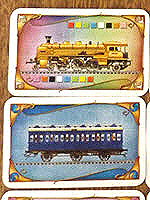
At its weight (1.85 out of 5, according to Board Game Geek), I contend that there is no game that combines card drafting, route building and set collection more simply and elegantly than Ticket to Ride. There are some excellent heavier games like Power Grid and Brass that have implemented route building well, and there are an innumerable amount of games that involve drafting and set collection, but Ticket to Ride is the one that anyone can use as a launchpad into those more complex games. Even more important that that, Ticket to Ride is a gorgeous production from Days of Wonder, which has proven to be a brand that emphasizes art and beauty, even at the expense of game design (especially in their more recent designs as of late 2021), and Ticket to Ride is no exception. It's pretty to behold, the maps are fascinating with their little artsy flourishes, and every card is intricately drawn with steampunk Victorian inspiration. Ticket to Ride truly represents the best of gateway game design and execution.

I have been tempted to sell Ticket to Ride because I own 70 other games that I want to play at any given time. Yet, if I'm hosting guests and they are relatively new to hobby board gaming, Ticket to Ride is one of those staples that I am happy to present to those guests. Admittedly, I sold my base Ticket to Ride in favor of buying Ticket to Ride Europe just to get stations, but I still own some form of Ticket to Ride. Thus, I treasure Ticket to Ride.

Should you trash or treasure Ticket to Ride?

If you own it, I strongly recommend treasuring it. Why not? Not all of your friends (I hope) are hobby gamers, so Ticket to Ride is invaluable for connecting with them.

If you don't own it, go buy it. Funnily enough, it can be found everywhere: in big-box stores like Target, online through Amazon, and even in the discount retail stores.

***

I really don't think there has been a true replacement for Ticket to Ride. You could convince me otherwise in the comments section, but it's a rare design that can only be imitated, not replaced.

Tuesday, October 5, 2021

Should You Scratch the Board Game Gem Purchase Itch?

Several weeks ago, I played a board game called The Lost Ruins of Arnak, published by Czech Games. A beautifully colorful mishmash of deck-building and worker placement mechanism, the game involves exploring a stereotypically tropical locale for tablets, gold, arrowheads, and rubies, all the while researching a lost civilization and encountering powerful guardians. Thematically, the game leans heavily on the Indiana Jones adventure trope; this is not a knock against the game, though... Despite the decidedly apparent Euro-game elements, the theme shone through the mechanisms and, along with the superior art, evoked the thrills of the adventures of the man with the whip and fedora.

As my time with the game concluded, I found myself pondering familiar thoughts, specifically the itch-till-it-is-scratched desire to purchase this gem of a game. Yet, two counterthoughts caused me to pause: one was the acknowledgment that I already own a game like this called Dune Imperium; the other thought was the gnawing feeling that I have many great games I rarely have time to play. Both thoughts bolstered each other like a world-class beach volleyball duo; one thought set the ball, and the other spiked it. In the past, my thoughts would dig out the spike, but this time I was thankful they did not.

If you do not follow the metaphor, I'll state it plainly: I have so many great games that the urge NOT to buy more games has become stronger. When I first became interested in hobby board games, I followed the trajectory of a new enthusiast in the spring of his hobby: every time I played a new game, I made it my business to purchase it (as well as some of its expansions). I started with the classic "gateway" games; in fact, my first game was Ticket to Ride, which is as quintessential a gateway game as it gets. Next, it was Carcassonne, Settlers of Canaan (not Catan), Pandemic, and Alhambra. Then, I used a list of the past Spiel des Jahres winners (one of the prestigious board game design awards) as my roadmap to guide my purchases. Fast-forward to now and I own some of the most highly-ranked games on Boardgamegeek.com. I do not say that to brag as much as to demonstrate that I have done much to build a reasonably sizable collection of 60-70 good-to-excellent board and card games.

I have been collecting and playing these connoisseur board games for over 10 years. I have sold some and kept many, but now I view my collection as replete with fine options that I have little impetus to expand. This is not to say that I do not enjoy them; quite the opposite, I enjoy all of them. Yet, when a new game is released, I remind myself that I must own a very similar game to that new one. For instance, when I encounter a game like The Lost Ruins of Arnak, I force myself to compare it to other games in my inventory. Considering my somewhat eclectic collection, I often find a game that approximates the new one. In this case, I own Dune Imperium, which, like The Lost Ruins of Arnak, is a deckbuilder with worker placement elements and a game board. Sure, the themes are markedly different (Indiana Jones exploration versus Landsraad conflict), but the mechanics feel close enough not to justify a purchase (for me, anyway).

...Or doesn't it? The internal conflict of many board gamers is whether to stratch that gem purchase itch or not. It's like any other hobby, I suppose: if you are interested in kayaking, for instance, you buy a starter kayak, then a kayak with more features, and then better paddles, a customized seat, a flashy life-vest, and other accoutrements. Soon enough, you realize that you no longer ride that old kayak or use those old paddles (oars?); they just sit on the shelf. For board gamers, though, the problem is compounded because (and this may be a novel idea for some) the old games were not really supplanted by the new games.

Think about it... Let's say you still own those classic gateway games. Did any game really replace Ticket to Ride? If you have a game that truly replaced the theme and mechanics of Ticket to Ride, why not sell or offload Ticket to Ride? Why keep both? If both games are different yet similar, what is compelling you to keep them? Do you have time to play both? There are so many questions that one should ask oneself when facing a purchasing dilemma. Sadly, there is no one right answer when it comes to scratching that gem purchase itch. For me, though, I have a limited amount of time and a lot of great games that cover my favorite themes and mechanics. Why buy a new game that does what one of my current games does?

Over the course of the next several (or more) articles, I aim to revisit the "old" games of my collection. I will ask the questions I posed above, hoping to equip you with the tools you need to make prudent buying decisions. Sure, we should support the board gaming industry. Yes, it is okay to buy a (or numerous) board games, especially if it's within your personal budget (don't use your rent or utility money - that's my recommendation). However, whenever I stare at Yokohama or Lorenzo il Magnifico on my shelf, I lament at how I have not had the chance to dive into the strategic intricacies of the games I have. Why buy more when I have a lot of great ones?

Thursday, September 10, 2020

What to Do If... You Want to Buy Yet Another Board Game

Imagine the scene: it is a gorgeous Saturday afternoon and three of your board game buddies visit you at your house. Your wife and kids are at a relative's house, so you have the house completely open. After the cursory hellos and opening refreshments, everyone meanders somewhat swiftly to your dining room table to play a somewhat complicated, but richly-thematic, board game. After a 15-minute explanation by the owner, you and your friends engage in what turns out to be a very enthralling round of gaming. Excited by the discovery (though mindful of your usual, well-known pattern of purchasing every board game you remotely enjoy), you remember the game, about which you cannot stop talking with your friends. The day ends on a high note as your buddies conclude a session with another intriguing, but somewhat less absorbing, board game.

Shortly after the last friend leaves, your family returns home. Without hesitation, you share your gaming experience with your wife, who rolls her eyes as if to say, "You want ANOTHER board game?"

...To which you quietly nod, as if communicating telepathically, "Yes!"

Whether you are a man or woman, you have probably experienced a similar exchange with your spouse; such is the life of an enthusiast of any hobby -- in this case, an enthusiast of board games. Yet, another scenario often plays out: you acquire the wonderful game only to attempt to teach your family or another group of friends and encounter a markedly non-positive response. They just do not like it. Now, you are stuck with a game that nobody else enjoys in your immediate social circle and your only chance of ever playing it again would be if you reconvened the original group, which (for whatever reason) is a very occasional occurrence. To augment your nascent depression, your spouse often (but lovingly) reminds you of how your hobby has once again led you to possess another fancy paperweight/shelf decoration/space-taking white elephant. 

...This may also sound familiar.

If it is not obvious, I have purchased games my family does not like more than once. This experience motivates me to spare you that same fate. I shall share some questions I ask myself whenever I am exposed to a game that I am tempted to buy. I must admit that thought I often refrain from making a frivolous acquisition, I do succumb to the occasional purchase.

What is appealing about this game?
Whether it is because of theme, mechanics, popularity, or even the fun time you had playing this game with your gamer friends, it is extremely helpful to identify, isolate, and analyze the reasons why the game appeals to you. These reasons help in answering the questions after this one.

What games do I already have that are similar to this one?
Compare the game you want to buy with the ones you have in your collection. If you have games of a similar theme, figure out what differentiates this potential purchase from the games you own. If you have games with similar mechanics, determine if the other factors differentiate the potential purchase enough to justify buying it. I have ruled out a few games because they were almost the same as games I already had. You also have to resist the "cult of the new" temptation of buying something simply because it is novel; new becomes old really fast, so a game should have more to it than just being new.

How often will I play this game?
For those folks that are relative rookies in the board gaming hobby, you will most likely play your modest inventory of games often. However, for those who have been in the hobby for more than a few years, every new purchase may take time away from your other games. This is affected by other factors: the expected time-per-player number, the complexity of the game, the amount of players the game accommodates, and the whether a game involves turn-based or simultaneous play represent aspects of games that can affect how often a game is played. If you have a bevy of 3-4-player games and the new one is in that player count, the new game may compete with the others for time. If the new game is a short one (say, 30-60 minutes maximum), it may slot into a gaming night agenda with other games. Cogitate seriously about how often you can play the new game, especially in light of the next question...

Will this game take away from time spent on the other games I own?
The tragic irony of any hobby is that the more you buy new things, the less you use the older things, and board games are no different. This is evident a few years after you become an enthusiast; you start out buying gateway games like Ticket to Ride or Pandemic, but as you acquire more games, you find that you are playing those gateway games much less. Eventually, the games you purchased 10 years ago only come out when you happen to invite casual players to your gaming parties or lunchtime gatherings.

Another situation you may encounter is when you play a beloved game less and less because of the other games; you would love to set up that beloved game, but you find yourself drawn to the more recently-bought ones. When you consider that new game, think about how often those old games will get played and if you even care. If you care, you may want to ponder how much you want the new game.

What games would I offload to make room for this one? Whether you have a vibrant local community of gamers to whom you can offer and sell your old games, you are an avid eBay user who markets your games, or an extremely generous friend who offloads games onto unsuspecting friends and family members, ridding yourself of old games creates space in your inventory, which may facilitate that new purchase. Opening up slots in your gaming shelf also addresses the previous questions; by eliminating certain games, you create more time play the new game while possibly erasing games with similar themes or mechanics from your collection. If you are not a seller or giver, though, the next question is crucial...

Would my family or friends really play this game?
Let us imagine that you have gotten this far in reflecting on why to buy that intriguingly novel game. Even though you have games that are strikingly similar to this new one, and you are perfectly fine with apportioning time to your other games while accommodating this game in your group's playing schedule, you have to ask yourself the most essential question of if your family and/or friends will play this game at all. Some may argue that even playing ONE time is justification enough; think about how four matinee tickets to a movie can set you back $28, which can also be the price of a game on sale and you will understand that point. Others may argue that they have multiple gaming groups and the new game will address one or more of those groups; if so, then buy it without any reservations.

Yet, I really recommend asking yourself honestly if your primary group is going to play the game. My primary group is my family; sadly, as the years have gone by and my sons have become teenagers who are NOT that interested in board games, there is much less enthusiasm to play games in my house. I have had to accept the harsh reality that unless I find a consistent gaming group, I would be hard-pressed to condone acquiring new games. If you are facing that reality, or an analogous one that may involve the dissolution of your gaming group or the common life changes that draw your gaming buddies away from the table (e.g. marriage, new baby, new job, and so on), then buying games may not be reasonable.

For game collectors: some people love to acquire new games just to put on their shelves and enjoy the mere fact of owning them. To those folks, I thank you for supporting the hobby. This article largely does not apply to you, particularly if you have the spare income to engage in collecting board games. Keep in mind, of course, that few games appreciate in value as collector items. Sure, if you own the first edition of the Dune board game in Near-Mint condition or some other limited edition, then you could most likely turn a nice profit compared to the original purchase price.

Outside of those exceptions, board games are generally not collectibles that rise or fall in the secondary market (in my experience) like baseball cards or comic books. Despite that, if you like buying beautiful games that instill that pride of ownership (and you are buying comfortably within your family's budget), then feel free to exercise your rights as a consumer.

***

I consider the thought process of whether or not to purchase a game as an algorithm that can either spare you from needlessly spending thousands of dollars or (in a few cases) complicate the buying process enough to dissuade you from buying anything. Nowadays, as a 10-year veteran of the hobby, I walk into board game stores and either buy expansions, card sleeves, or nothing at all because I really want to play the games I already own. Whenever I am tempted to buy, I run the algorithm through my mind. Ultimately, I do enjoy buying board games, which is a tendency that is turning me more into a collector than a player, which is somewhat tragic. It is like buying nice tools just to mount on a garage wall, or buying a sports car just to wipe it occasionally with a cheese cloth and gawk at it; indeed, having it is pleasurable, but I am not allowing the item to serve its purpose. That leads into grander questions about art and decoration; why have such things in your house if all they do is sit there? To that, I say this: isn't life better when your home environment is just a little prettier? If you elevate (or reduce?) board games to art or decoration, then no amount of questions can really stop someone from buying that odd board game once in a while.

Thursday, May 7, 2020

Are There Board Games to Suit All (or Most) Moods and Occasions?

Over the last 25 years, the board game hobby has seen revolutionary change. Before the mid-1990s, board games could have been categorized in two basic groups. On one hand, there were casual-player games like Monopoly, Risk, Clue, Scrabble, and Trouble, which were available in toy stores and big-box stores everywhere; they were ubiquitous and well-known, but not always highly regarded. Conversely, there were decidedly esoteric games that involved complicated rules and many chits. These included railroading games and war simulation games. Rare were the games that straddled both camps; games such as Axis & Allies and Fortress America were two examples of games that involved complex rules, but still somehow inserted themselves into the public consciousness. (Note that I'm not including role-playing games or collectible card games in this discussion.) Then, in 1995, a curious game called Settlers of Catan was published, followed by El Grande (1996), Tikal (1999), Carcassonne (2001), and Ticket to Ride (2004), along with a plethora of intriguing titles. These games ushered in a new era of games that populated a middle ground between casual board games and esoteric board games, combining relative complexity with accessibility and aesthetic craftsmanship. They could be somewhat easy to learn by casual players, intricate enough to engage old-school esoteric gamers, and be downright beautiful on the table. Nowadays, the games on the market exist as a testament and response to the increasingly-demanding standards of consumers that expect artistry, well-written and test rules, and theme.

Despite the revolutionary transformation of the board game hobby, there is one question that is as prevalent as ever: are there board games that are suitable for all people and all occasions? Obviously, the answer is a resounding "No," so the question we should ask is, "Are there any games that come close?" To that query, the answer is a resounding "Maybe." Before you form your own mental list of games to suit most occasions, let me share with you some questions that I ask myself when I prepare to host or attend any gathering, whether it's a board game day, a birthday party, or just an extended family gathering.

Before I continue, one useful metric (or better or worse) to which I refer that is available for each game on boardgamegeek.com is the Weight of the game. Users rate games on a score of 1 (Light) to 5 (Heavy). Though I'm not a fan of quantitative scores for qualitative information, this metric is good enough for you to compare games. It has also been very handy for informing my game-buying decisions when thinking about my family. Note, however, that the ratings were entered by hobby gamers; what they think is "Light" might be a little heavy for the non-gamer. As a rule of thumb, I consider games between 1 and 1.5 as "a little challenging for non-gamers, but not too bad," between 1.5 and 2 as "requiring some hand-holding and more explanation," and between 2 and 2.5 as "requiring the patience and guidance of an expert if this person has any chance of gleaning any fun from the session." Oh, and for games at 3 or higher... well, I'd stay away from those until your would-be gamer has had a few sessions with the "gateway games."

Who is invited to the game session?
The most crucial question you can address is the composition of your invitee list. Do you have board game enthusiasts, non-gamers, or people who fall somewhere in between those two groups? Did you invite people who actually do not like games? Depending on who is attending, you have to assess your game collection and determine which games match your invitees. For casual gamers, skew towards 2 or under. For your enthusiasts, aim for at least a high 2 (2.8, for instance).

What's the occasion?
Barring the possibility that your event is a dedicated board game session, your invitees will not be mentally prepared to break up into separate groups and game tables. I have found that people mostly want the freedom to intermingle and talk to many different people. For the gamer host, this can be frustrating, but you have to think about the people; usually, when people hear "Party," they think of everyone interacting with each other, not tables in different rooms for focused gaming. Thus, games that involve (almost) everyone are more readily accepted.

Beyond that, consider the purpose of the session. Is it a birthday party? Maybe choose party games like Codenames (1.3), Taboo (1.22 -- yes, I said Taboo), or Pictionary (1.24). Is it a family gathering of aunts and uncles? Once again, party games or games that involve more than eight people are effective in engaging the entire group. Are two families with four or fewer members (each) present? Then, consider a game like Seven Wonders (Weight: 2.3) that involves simultaneous play or team games like Secrets (Weight: 1.27).

Do any of your invitees NOT like games?
This is a tough one because one unenthusiastic person can stymy any attempt at a game. At best, that one person will wander in and out of the room as they bounce between the refreshments table and your game table; at worst, he or she will distract the table with side comments and scuttle the session. In either case, the person is neither trying to be awful nor trying to sabotage the game; for whatever reason, he or she just doesn't like games. Maybe it's because of a childhood memory, or maybe it's because they're not competitive. Whatever the case, this person has yet to have a favorable experience with games.

With individuals like this, there may be NO game that suits them, but that shouldn't stop you from organizing a game. Give advance notice to your invitees that you will organize a game; then, take the non-gamer aside and ask him or her to participate. If your attendee declines, then offer the freedom of observing. For your reluctant gamer type, skew towards simpler games at a Weight of 2 or less. Among the best at that Weight for large groups include Codenames, Dixit (1.2 -- especially the Odyssey edition), and One Night Ultimate Werewolf (1.4). A lesser-known game with a traitor element is Saboteur (1.33).

How much time do I have?
If your gathering is not a dedicated gaming session, then only a portion of your scheduled time will be committed to board games. With this in mind, aim for shorter games. Another data point that you find on boardgamegeek.com is Playing Time, which assists you in determining a suitable game for your gathering. However, I recommend adding 50% more time to that; for instance, a game with a Playing Time of 30 minutes may actually take 45 minutes because of setup and instruction. Generally, select a game that fits well under your projected play time.

***

Thanks to Board Game Geek's website, you can answer the question of "Are there any games that come close to suiting all occasions?" based on Playing Time and Weight with a fair degree of confidence. In my experience, I have found that a confluence of medium Playing Time length (1-2 hours) and a Weight between 1 and 2.5 often ensures that the games you choose will target most audiences. Simpler gateway games like Codenames and Dixit have been easy to teach and fun for gamers; slightly more complex "Next Step" games like 7 Wonders have required a bit more teaching and guidance, but have won over people and turned casuals into nascent gamers. Will such games enthrall esoteric gamers? Well, games that fall in this confluence of data points should entertain them enough outside of a dedicated board game night, but they may become withdrawn and slightly resistant if your game night consisted of games with a Weight of less than, say, 2.3, though I would concede that this is not a rule.  It is indeed amazing how Board Game Geek data points can help in selecting games...

Yet, if you would prefer to trust your own knowledge and intuition, just imagine the perspective of each of your would-be participants. In the past, I have often relied on hunches in selecting games. I have made mistakes, but those mistakes were borne more out of my inability to understand the other person's perspective than out of a lack of effort or information. In other words, you truly have to put yourself in that person's position. Imagine being a non-gamer and what that feels like. It's easy: simply think about a hobby you don't like and then extrapolate from there. If you succeed, you'll understand how boring, unexciting, or daunting board games can be to such a person. After all, these are feelings and thoughts I have when I think about, say, building sheds or scrapbooking (which are NOT bad hobbies at all; they're just not my hobbies). Once you can conceptualize those feelings, you discover that you can choose games that are not-so-painful for the non-gamer.

Wednesday, January 22, 2020

When Board Games Don't Matter

Last Sunday, six young men piled into a silver Toyota and drove to a house on a dare. Apparently, the dare involved ringing someone's doorbell and then running away just before the door was opened. One of the young men ran to the front door, rang the doorbell, and bolted to the waiting getaway car. A middle-aged man answered the door and spied the Toyota escape down his street. Extremely enraged, the squat man rushed to his own while sedan, started it, and sped in pursuit of the young men. As the older man caught up to the silver car, he bumped it at high speed. From what has been reported, he bumped it more than once. After a particularly forceful impact, the young driver of the silver car suffered a concussion and blacked out.

The silver car careened off the road and collided with a tree.

The angry driver fled the scene.

Of the six teens, three of them passed away. Two of the survivors were brothers of the deceased. The driver also survived. My family and I knew all three of the deceased young men. We know two of the survivors. We even spotted them at church earlier that day.

When I reflect on this tragedy, I ponder how I did not do my part in youth ministry to impact these guys. This is not to say that any past interventions would have prevented this horrific outcome, but I think about how every young person deserves our attention. Every youngster needs the love and wisdom of adults to guide them. I find my mind and memory drifting to past moments during which I was in close proximity to them. I dwell on how I could have interacted with them, how I could have been more intentional with my conversations with them, and how I could have looked past whatever was happening to show them that Jesus loves them.

Then I think about my sons and how these boys were sons to fathers that loved them. I know I cannot fully understand what those fathers are feeling today; when I imagine it, the searing pain of loss is palpable, but probably doesn't approach the anguish of these men. Yet, I can comprehend enough to view my sons in a different light. I am thankful that my sons are still with me, but I have guilt about being thankful when those three fathers do not have that option.

I know that these boys are in the presence of God right now, and I know that God is present in tragedy. He has brought a church together in mourning, He has brought justice upon the perpetrator, and He has reached the hearts of many of the youths in the community. Yet, we all mourn. In a way that is essential for any human being, we should be devastated emotionally for we will not see these young men again in this lifetime. We will not see their smiling faces except in videos and photos...

But I know we'll see them again in a place where the sins of humanity are stripped away. There will be joy on that day.

Board games don't matter today. More than ever, what matters is God and people. What matters is that we hold on to our loved ones and those that need God's love with both hands for as long as we can because our time with each other here on this earth is excruciatingly short. The good news is that eternity is long. Treasure your loved ones now and prepare them for what is to come after this very brief sojourn through this life.

“And we know that all things work together for good to those who love God, to those who are the called according to His purpose" (Romans 8:28).

Tuesday, January 14, 2020

The Expectant Look of the Lost

Every board gamer aims to conduct, or at least participate in, that ideal and miraculous board game gathering during which every person is thoroughly engaged and focused. At such an event, there are simultaneous games being played at various tables with each table run by an expert who can explain the rules and guide the proceedings. Those same tables are populated with players who are well-versed in the conventions of gameplay; they know the difference between deck-building and action-selection, the probability of rolling one result over another, and the merits of card sleeves and customized box inserts. No one is waiting for the action to come to them; each player is reading the rules, enacting strategy, and generally playing without the expectation of help or hand-holding. This is the best any board gamer could ever want.

Of course, this kind of gathering can be dishearteningly rare. More often than not, the resident board game enthusiast of a social group is THE authority on games, so he is called upon to pick the right game, teach a disparate group of learners about the game, know every rule, explain every tactic and strategy, and ensure that everyone is engaged and enjoying the experience. When this social group convenes for the odd board game night, most of them stare at the gamer, expecting him to conjure up fun as a magician would conjure up a rabbit from a silk top hat….

Stop RIGHT there…

That’s the look that I want to focus on in this article. It’s that glare… that look of waiting for one to do something. Physically, the head cranes forward slightly, the eyebrows are unfurrowed, and the lips are slightly pursed as if the person is trying to communicate escalating boredom through their eyes only. It’s a look charged with pressure, cautious anticipation, slight disapproval at the concept of playing a “board game…” It’s the same look that most people make when they attend a party but the host has been derelict in his duties and has, instead, opted to play X-Box in the guest bedroom while everyone else fends for themselves. It’s a look…

It’s a look that drives me crazy… but it’s the kind of look you’re going to have to handle.

See… most people don’t play board games with the interest or intensity that you do. Most people have jobs, make house payments, watch TV, spend time with their kids, spend time on their phones, and spend time yelling at their kids who spend time on their phones. If anyone is enthusiastic about something, it’s a myriad of other things besides board games, so when these people go to your house, they expect you to entertain them with your hobby.

You’re not alone, though. Every hobby’s enthusiasts have to endure this.

Yet, you’re going to have to accept it. For the longest time, I had (and still have) trouble with that expectant kind of demeanor. As you can tell in the title of this article, I have come to label that look as the “expectant look of the lost” (or ELL) because that’s what your non-board-gamer friends are:

LOST

This is the crux of my article. When I think about ELL, I consider how it is no use becoming bitter or upset when your non-gamer friends have no clue about how to participate in a board game party. It’s also no use expecting them to meet the high standards you secretly harbor about the aforementioned parties. Obviously, I state these points because I struggle with them, too, and my hope is to encapsulate the frustrations you might feel as a board game enthusiast.

Now, normally, I would frame this article as a “What to Do If…” article and list ways to cope with the issue, but I do not want to rely on that formula for this article. Frankly, I don’t necessarily have solutions for ELL because, well, it speaks into the inherent impatience of people (maybe just Americans?). People demonstrate this look for numerous reasons because, even though they are among friends and are generally safe from danger, they have little understanding or control over the proceedings but do not want to look overtly impatient. In my opinion, handling this can be reduced to the type of person you are.

If you are an introvert like me who fancies himself to be a person who is sensitive to other people’s feelings, you may see fit to read the room and decide NOT to play games; it’s the “high road,” but it causes the evening to be less fun for you. If you’re a lively extrovert, you may just enforce your will and drag people into game time; this may affect people somewhat negatively and sour them to gaming. If you a staunch planner type, you may want to plan ahead, assign key people to lead game tables, and organize people by table; some people do not like being treated like high school students, though. If you’re spontaneous, you may have to learn to overlook people’s quizzical looks and just play. I know that there are several viable approaches to this issue, but each one depends on you and who is in the room with you.

This leads me to something that I have not adequately addressed: why I am writing this article in the first place. Indeed, commiseration and catharsis are two motivators; ELL has been a thorn in my side for a long time, and I hope that others can relate. Moreover, the classic raison-d’etre of “writing a blog entry as a personal reflection” prevails. Setting these reasons aside, I know I am writing this article because of a core disillusionment I sense in myself about board games: essentially, they (or any other hobby) do not fill the God-shaped hole in all of us, and they certainly do no fill that hole in others.

This further leads me to a revelation: like almost every hobby, board gaming is a momentary distraction that ultimately leads to dissatisfaction and the desperate acquisition of more games to stave off the oncoming dissatisfaction. In this way, ELL is not the other person’s problem; it’s OUR problem. People are looking to us to entertain them; in a bizarre twist, we are looking to board games to entertain US. If we think about it long and hard enough, we find that everyone will be left wanting eventually. We are all LOST.

I realize that board games are fun, but I also know that I have to put them in their correct place. They are social lubricants, distractions, baubles, discussion topics, and ways to connect with others. They do NOT take away our boredom or impatience. They do NOT make our everyday lives more exciting and intriguing. In other words, board games are not that important. Once we come to grips with that, I wager that we find it easier to cope with the expectant look of the lost. We may never have that perfect board game party, but we can certainly form thrilling connections with others and forge lifelong friendships.

With that said, it doesn’t hurt to have a few gamer friends help you organize and run a board game party. With their assistance, a board game day with casual players can be supercharged and fun.

Wednesday, October 9, 2019

What to Do If... You're Not Good at Board Games

Full disclosure: I'm not that great at board games. When I used to have regular board game club meetings at a previous company, I kept track of each game and how each player placed. Overall, I averaged a place of 3.5, which put me between third and fourth place. Sure, sometimes, I managed to win a game, but, more often than not, I was an also-ran. To be fair, I often had to teach the games I brought, which meant I was distracted and found myself demonstrating moves more than choosing the best move. That notwithstanding, when it came to games with which my group was familiar, I did not win so many.

Of course, over the years, my enthusiasm for the hobby has compelled me to read articles about strategies and tactics for specific games and for games in general. I have also played a wide array of titles running the full gamut of diverse game mechanics, and I've faced numerous opponents from which I learned much. Yet, I'm not that great at board games.

I'm just fine.

What do you do if you are not good at board games? I must admit that this is something I'm figuring out even now, but I would like to share with you my thoughts and what has helped me improve. First, here are the obvious solutions:

Read Game Articles
The first tip is one I already mentioned: search for your favorite games and you will find articles from both professional and amateur writers. Many articles are penned by enthusiasts on sites such as Board Game Geek, but some are posted by writers on video or board game sites. Though many of these articles are reviews that discuss basic rules and win conditions, you can glean key points, such as general strategies,  rules that can be exploited to create favorable game conditions, and even a few of the common paths too victory. More importantly, you can more easily find those games that suit you either from a mechanical or a thematic standpoint.

Play Games that Cover Well-Known Mechanics
If you browse Board Game Geek long enough, you may discover such mechanics as "worker placement," "area control," "deck management," "deck builder," and so on. These terms may be new or familiar to you, but if you seek the exemplars of each mechanic type, you can improve your overall gameplay. An acceptable place to start is with gateway games: Ticket to Ride covers route-building and set collection, Carcassonne (or Kingdomino) involves area control, Stone Age incorporates worker placement, and Settlers of Catan is an amalgam of set collection, negotiation, and area control. Beyond that, there are Next Step games like Dominion (deck-building) and 7 Wonders (hand-passing) that can provide the learner a grounding. By playing these games, you learn the winning tactics for mechanics that prevail in hundreds, even thousands, of games out there. Consider this: strip away the theme of a game and you may find that a lot of games are very similar (did I say that?).

Learn a Few Games Really Well
You can also assume the approach of learning a few games deeply, even taking a scholarly approach toward absorbing the vagaries of those games. One striking example of this is chess, which has an innumerable amount of books and articles dedicated to analyzing the game and the matches played by its very best players. Even modern games like the aforementioned gateway games and long-lived staples like Agricola, Puerto Rico, Twilight Struggle, and Castles of Burgundy have much material that you can research and play. In any case, as you dive more into your game of choice, you pick up on the rhythms of play and what combinations work.

Ask Questions In the Local Store or Online
Sometimes, the shopkeeper or locals at your friendly neighborhood game store can be an exceptional source of information about certain games, especially ones that are demonstrated or played there. If you are inclined to be social, visit the store and ask questions. I recommend starting with the shopkeeper, who may know about the game you want to learn. In addition, you can post questions on websites like Board Game Geek. With the panoply of posts on Board Game Geek, you have enough fodder to occupy you for months just to dissect one game.

Watch Games or Play-through Videos Online
This one's obvious, so I won't dwell on this suggestion, but I do recommend examining several channels on YouTube or any other video site before giving up. Note that there are a lot of sub-par game channels and commentators who do nothing to help, so try out several channels or shows before finding a channel that helps you learn a game.

Join a Group of Enthusiasts...
Just as chess scholars focus their time and energy on that game, you can specialize in any game, particularly ones that boast a robust player community with (or without) tournament structures. Keep in mind that most players in these groups are experienced and competitive, so your insertion into, and involvement in, these groups largely depends on a combination of the kindness and inclusivity of the members and your tolerance for their social shortcomings (i.e., you may have to put up with trash talkers or jerks).

... Or Start Your Own Enthusiast Group...
If you are averse to spending your precious time with strangers and/or possible ne'er-do-wells, then gather a few of your interested friends to commit to playing one game week-in and week-out. One example about which I've heard is Agricola (or Caverna for the more modern gamers); there are groups that meet consistently just to play Agricola because the game start is highly variable with a plethora of different occupation and minor improvements decks to use or even mix. The most significant advantage of starting a group with your own hand-picked friends and acquaintances is that you can rest assured people will (generally) relate well.

... Or Even Play Solo
There are probably hundreds of games that you can play on your own (even though board setup for a game you are playing alone may dissuade you from doing it), and there are even tablet versions of games that you can play to acquaint yourself with the games better. However, you may not have realized that ANY game can be a solo game if you're willing to play as more than one player. Much like boxers using shadow boxing as a training method, you can pick up on game intricacies playing against yourself.

Now, let's discuss the nitty-gritty:

Know a Game's End Conditions
Whenever I teach a game, I make sure to cover game-ending conditions because players need to know how a game can end (or be forced to end). Players are often surprised at how quickly a game has ended because they were not cognizant of the end conditions. This surprises me, in turn, because I commit an appreciable amount of time to explaining the end conditions, but even I forget from time to time. By knowing the end conditions, you can control the tempo of a game; just think inductively about the events that lead to the end and either make them happen sooner or later.

Know a Game's Win Conditions
Whenever I teach a game, I also cover win conditions because players need to know what is required to win. To become better at a game, you must know how to win; this informs all of your in-game decisions. This is not overstating the obvious; I am usually shocked when people do not spend the time to acquaint themselves with how many possible ways they can win. You also have to consider how win conditions do not always mean end conditions; just because you end a game early does not mean you win, so know the differences between the two types of conditions.

Understand Your Pieces
Take stock of the in-game items and tokens you have at the start of the game. What can they do? More importantly, how can each item expedite reaching the win or end condition of a game?

Consider How Your Starting Position Differs from Others
In some games, each player has abilities that are unique compared to other players; usually, these asymmetrical powers bend a game rule or provide some kind of advantage. Know how your abilities differ from your opponents and exploit the difference. Also, know how your opponents can accomplish feats you cannot. Instead of trying to beat your adversaries using their strengths, attack their weaknesses with your strength.

Look for Powerful In-Game Interactions
Whether it's card combinations, sequences of chosen actions, or even how different player abilities intermingle, study how you can use game elements in combination to create advantageous turns of play. Remember that though one card or ability may be highly effective in isolation, look for ways to boost the effect with another card or ability. Then, write down the combo and research it after the game is over.

Interfere with Players Only at Key Moments
There are aggressive game players out there who seize every opportunity to interfere with other people's plans. Conversely, there are players who, though not necessarily passive, are more patient and wait a bit too long to act. This is more easily said than done, but try to balance executing your plan with obstructing your opponent. For example, in Ticket to Ride, there are "choke" routes where, if taken by someone else, a short connection between two cities can be blocked, compelling one or more players to find a way around the choke point. Identifying these one- or two-car routes and taking one or two turns to play trains on these routes can stymy an opponent's efforts to connect. Look for such moments in the game. It may take a session or two to discover them; when you do, catalog them in your mind for future plays.

Find the "Broken" Card/Token/Item and Exploit It
Occasionally, a game might feature one or more items that afford you a profound advantage over the other players. When that item appears, emphasize acquiring it. Do not worry about how fair or unfair the item is - if it's supported by the rules, use it.

Maximize the Actions You Take Each Turn
Many games rely on an action mechanic that involves taking one action per turn, but also allows for more actions depending on specific conditions. One example of this is the X-Wing Miniatures Game, which affords each ship one action after the maneuver; yet, in that game, using linked actions or upgrades to increase your action economy creates advantageous situations for your pilots, especially if you can get a Focus token AND secure a lock in the same phase. Find in-game items or elements that allow for multiple actions when players normally take one. By doing so, you optimize your action economy while your opponent flounders in keeping up.

And, For the Nice Players Out There... Strive to Win!
One of my quirks (failings?) as a game player (besides the fact that I usually have to teach people while playing AND keep the rules straight for everyone, which makes me prone to making poor decisions for the sake of educating others) is that I don't like watching people lose. Maybe it's because I hate the feeling of losing and empathize with people when they feel it, or maybe it's because I like spending time with happy people. What I try to consider always is that when someone is playing a game against me, I create the best experience for him by playing to the utmost of my ability and aiming to win. This makes the game challenging for your opponent, who most likely wants to be challenged. If you happen to be a kind and gentle person, the most wonderful gift you can give your opponent is trying to beat him or her. People DON'T have fun when their opponents are pushovers. In this way, to be truly loving, you have to destroy your opponent!

I'm sure there are other tips out there for the quasi-mediocre player who wants to improve their gameplay. I just continue playing games and enjoy them as beautiful distractions that have stunningly-crafted pieces, gorgeous art, and multifariously complex rules and systems that one must labor to master. Each game is a journey that should be relished for what it is, win or lose. Then again, it does feel better to be victorious than to learn from defeat, even though the learning part has a more significant impact over time. Personally, being "just fine" at games is fine enough for me.

Monday, July 29, 2019

What to Do If... You Don't Want to Play Gateway Games (But You're Playing with Casuals)

As a board game enthusiast, it can be challenging to play with people who aren't enthusiasts. Such folks are often called "casual players" or just "casuals." It's a term that is somewhat pervasive in American vernacular when discussing people who only engage in an activity occasionally. This is especially the case with board games because most people do not pursue this hobby with the kind of passion to drive them to play regularly. However, for the board game enthusiast, herein lies the rub: more often than not, you get a hankering to play a board game (particularly a somewhat complicated one), but the only people that are readily available are casuals, whether they're co-workers, friends, or family members, so you assume the challenge of teaching casuals how to play a reasonably difficult game. Of course, many of us know how this ends: lots of blank expressions, yawns, head scratches, and a general desire for the casuals to extricate themselves from this train-wreck game session as expeditiously as possible.

This scenario is not uncommon, and it is one I've encountered several times, but what undergirds these situations is that apparent gap of interest and understanding between the enthusiast and the casual. Thankfully, unlike with sports in which differences in ability can result in lopsided victories and un-fun to be had by all parties, board games exist at varying levels of complexity. Among board gamers, games that are somewhat strategically rich and a cut above Monopoly are called "gateway games" with simple rules, short setup, and a sense of agency that differs greatly from the likes of Candy Land and Chutes and Ladders, to be sure. Games like Ticket to Ride, Carcassonne, Pandemic, and Settlers of Catan inhabit this ideological space of gaming. Now, don't get me wrong; these games are fun and a credit to the hobby, but there are times when the board game enthusiast wants more out of the gaming session than these games, which leads me to the crux of this article.

Here are some approaches you might try if you have a group of casual players, but do not want to play gateway games:

Research and Buy a New Game
If you navigate to Board Game Geek, you can view lists of how enthusiasts rate games. One list that is relevant to the kinds of games that casuals may enjoy is the Family Games list. On that list, you will find the classic gateway games, as well as some of the newer titles. My advice with this list is to find 3-5 games that catch your fancy and read reviews about them. They may be games that are less complex than what you truly desire, but you may find some gems that both are new to you and satisfy your urge for something more than gateway games.

Besides Board Game Geek, I recommend visiting Target, Barnes & Noble (if you're in the United States), or even the local board game specialty store. At Target, browse the "Strategy Games" section; at Barnes & Noble, browse the titles and find one that is thematically and mechanically appealing; and, at your local game store, ask the counter person (or owner) about their recommendations.

If you do NOT want to buy a new game...

Make Your Shortlist
In your existing collection, rule out the gateway offerings that you may have, but also think about your experiences with each game and consider your personal assessment of their levels of difficulty. Then, cull down all of the initial candidate games to a list of five to seven games that you would really like to play.

Look at Time and Player Count
Then, without much thought, examine your list while looking at only two criteria: time to play (which is sometimes calculated as a minutes-to-player ratio) and player count. Player count is important because you have to accommodate your entire group of casual-player friends, but expected time of play for each player is not necessarily crucial as a determinant for the length of your game session as much as an indirect indication of complexity; basically, the longer the game, the more complex it might be. This isn't a foolproof method of checking complexity, but this metric does give you some idea.

Determine the Game's Complexity
The beauty of gateway games is that though they are strategically rich, they are not painfully complicated. Many of these games have simple rulesets. For example, Carcassonne's turn order is easy to grasp: draw a tile, place one of your tile's edges against a compatible edge, and then choose whether or not to place an available worker on a feature of that tile. Once you understand the scoring of each feature, especially end-game farmer scoring, the mechanics of the game aren't daunting. Of course, the richness of Carcassonne lies in the discoveries players make as they gain experience. I suggest aiming for games that harness this beauty; at the very least, choose games that have a repeatable turn order and provide a reference card or sheet to help players along the way.

Consider The Number of Interwoven Mechanics
Working from the assumption that you are a board game aficionado, you are most likely aware of the mechanics of each game that you own. Is a game a deck-builder? Is it a worker-placement game? Does it involve set collection? Are there push-your-luck elements? Inherently, each identifiable game mechanic is no more intricate than any other mechanic, but some are more pervasive among casuals; for instance, set collection is a common mechanic found in many basic card games. However, I often keep in mind how many mechanics function inter-connectedly. Take Lewis & Clark; this game involves hand management and hand-building, worker placement, resource management, and even a racing element. With all of these mechanics in motion, even experienced board gamers have some initial problems with understanding the flow. Try to choose games that minimize the number of mechanics that prevail. For help with this, look up any particular game on Board Game Geek to discover how many mechanic categories are ascribed to that game.

Check Out the Components
A simple rule of thumb I use is the fewer the number of types of components involved in a game, the less complicated it probably is. For example, a game that has tokens, ships, three decks of cards, cardboard chits, dice, a game board, AND additional game props is most likely an overwhelming experience for the casual. Yet, a game with a set of dice, player pieces, two decks of cards, and a game board may seem less threatening. There is no magic number for types of components, but I generally take mental stock of what items are included in a game to decide if a game would suit my group of casual players. Despite this, watch out for games that appear simple with few components, but have cards that serve multiple purposes (e.g., Twilight Struggle), more than four types of tokens, chits, cubes, and/or bits, asymmetrical player powers, random starting board states, or a combination of these concepts.

Ponder the Attractiveness of the Theme
Let's admit it: some things may seem boring to the casual player. Trading in the Mediterranean? It had better be a visually-stunning game. Stock market trading? It had better have a lot of yelling. Space or science fiction? Make sure your group likes sci-fi. When choosing a game, think about your casual friends and what they might like. When in doubt, stick to popular tropes (Marvel, Star Wars, Disney, Star Trek, Harry Potter, or the like) or themes that are reminiscent of themes that are currently popular.

However, I have found that certain themes can backfire. For instance, though Game of Thrones and other sword-and-sorcery shows are popular, the medieval fantasy milieu is NOT for everyone and may be a turn-off. During one session when I presented Shadows over Camelot to my group, one of my not-so-casual friends quipped that the game was TOO nerdy for him, as if his traumatic memories of Dungeons & Dragons (or any other fantasy-themed game) had infected his outlook on knights and wizards. Identifying these "backfire" themes can be difficult, so I recommend adhering to the basic approach of avoiding themes that have stigmas attached to them, such as fantasy or sci-fi. I'll admit it: though nerdiness is en vogue now, some of your non-gamer friends may have no interest in stereotypically "nerdy" genres. Consider themes that are more universally relatable, such as transportation, economics, or crime.

Head-Simulate the Session
After all of your analysis, try to put yourself in the minds of your casual-player friends. Imagine conducting the gaming session with them, taking into account the non-gamerness of each person; this is the essence of head-simulation. Would they enjoy this game? Would they spend too much time asking questions? Does the game become bogged down? By doing this, you can avoid some stolid game sessions that, consequently, convince your friends that board games are boring.

Go with Your Gut
Even if one of your shortlisted games passes the various tests I have posited, I strongly advise you to rely on your "gut reaction." Sometimes, there are intangible elements to weigh, including your own ability (or inability) to teach a particular game effectively, your own qualms against a certain game, or even your past bad experiences with that game. Your intuition (i.e. your gut) should suffice in considering these things. Ultimately, if you feel that a game just won't work for your casual friends, put it back on the shelf and move on to the next game.


The hardest thing for any board game enthusiast to do is to admit that board games are just NOT the way to go when it comes to entertainment for a particular evening. I have walked into many adult gatherings with my duffle bag of games in hand, ready to expose my friends to some truly wonderful creations, but deciding not to open my duffle after all. I try to read the room, sensing if the host would be open to me hijacking the party by declaring that I'm starting a board game. Or, if I'm the host, I might detect that "odd" desire of people to "just relax" and not want to use their brains for anything besides socializing. Sure, there are awesome social games that fit this crowd (such as Two Rooms & A Boom or One Night Werewolf), but this is an article about non-gateway games for casuals... Occasionally, the best thing to do is not to play; save the games for another day when the conditions are right.

Thursday, June 27, 2019

Is Chess Really the Best Board Game Ever?

(Note: in this article, I capitalized Chess, Go, and Shogi, even though they are not often capitalized in writing, to not only pay homage to these games, but also to have their names stylistically resemble the names of modern games.)
In the United States, as many of you know, most people who do not play board games as a passionate hobby have heard of such games as Monopoly, Sorry, Clue, Risk, Connect Four, Stratego, Candy Land, Chutes (or Snakes) and Ladders, Checkers, Backgammon, and, of course, Chess. Some of them are fine games even now, but some are outmoded and/or involve no sense of agency or decision-making whatsoever (I'm looking at you, Chutes and Ladders), yet Chess seems to retain that mystique as being a "classic" game. To be sure, Chess is so widely played and has such longevity that it has been venerated to "best game of all time" status by many folks, at least as far as I can tell. You could probably ask any person on the street about the best board game of all time, and I would not be surprised that Chess is mentioned more than once.

The funny thing about Chess, though, is that for all of its history and (clearly) international recognition as a game for really smart people who make a profession out of studying and playing it, finding people who really ENJOY Chess can be a very challenging task. Indeed, there are grandmasters, wannabe grandmasters, local tournament winners, and even faux-protegies who fancy Chess. These same folks plunge headfirst into study, memorizing openings and closings, dissecting past matches, and learning so much about the vagaries of the game that they come to see in-game patterns of play that are only visible to a true Chess enthusiast. I believe that it is because of this level of erudition and perceived difficulty that people somewhat begrudgingly acknowledge Chess as the best game of all time; some people even use Chess as a determiner of how intelligent or strategic a person is, which is incredible for a game to be vaunted to that status.

It is these same folks that underscore the greatest challenge presented to the would-be player of Chess: to be good at it, you have to study and study and practice and study. This may be true of many pastimes and even other board games, but Chess elevates this requirement to a very high level such that only staunch enthusiasts really enjoy Chess. I suppose that a degree of mastery of anything both dictates if one enjoys that thing and how much he or she enjoys that thing with other people. If you know how to play some tennis, you will enjoy tennis with people of similar skill level, practice habits, determination to improve, and play experience. However, if you are a casual weekend warrior who plays against a former Division I college tennis star, both you and the almost-pro would not have a fun time (unless the would-be pro is sadistic and relishes trouncing sad-sack casuals). In any case, practice and study (and even, dare I say, natural ability) are key to enjoying tennis, Chess, or whatever, but some pastimes require it more than others (such as Chess).

This leads me back to the question posed in the title of this post: is Chess the best board game of all time? Well, let's splay out its credentials: simple rules for movement and attack, elegant board and piece design, wide-ranging global availability and recognition, centuries of tried-and-true competitive play, and the accessibility of volumes of scholarly study of which any student of the game can avail himself or herself. Add to that the myriad of rebadged sets (Lord of the Rings Chess, Civil War Chess, Mario Chess, and so on!), levels of competition, and variations (Shogi!) and you have a venerable game that is appreciated and adored the world over... Yet I contend something that a few others have suggested...

Chess is outdated, abstract, inaccessible to the casual UNLESS he or she plays against another casual player, limited in gameplay, and so exclusive that you must commit serious study (or possess immense, natural, genius-level skill) to be remotely competitive.

So... let me unpack that recognizably controversial statement. First of all, Chess is a centuries-old game, which is fine except that, especially in the last, say, 30 years, there has been a wealth of deep, rich board games and card games that have been developed and published that are replete with theme and fluff (i.e. little theme nuggets that work within the rules to reinforce game play) that enliven such games. To find out more, simply navigate to www.boardgamegeek.com and browse the top 200 strategy games.

Secondly, as I pointed out earlier, you have to dedicate time and focus to compete in Chess, which makes it less out-of-the-box playable against semi-skilled players than a game like Ticket to Ride or Carcassonne. Sure, both of these games have randomness, and Chess does not, but I contend that it's only enough randomness to give the inexperienced player a little boost. Some have decried randomness as a "crutch" that can punish expert play, but there is a skill to mitigating randomness. For example, in the X-Wing Miniatures Game, your attack and defense dice rolls may stymy your good flying and firing-arc aiming, but you can improve your chances with well-chosen upgrades that allow for re-rolls or by selecting the right action to perform, such as getting that Focus token that increases your hit percentage per die from 50% to 75%. Dealing with randomness is a skill set that is necessary in life, and it is something absent in Chess (which is NOT an ironclad argument against Chess, per se, but it does reinforce my point that Chess does not really support the inexperienced player).

Thirdly, even though computers have calculated the millions of possible moves in Chess, in practice, as the game state progresses, your options are very limited. For instance, after six moves, the board is in a state in which there are more horrible moves that can lead to capture than excellent moves (or even harmless moves) that allow you to advance your pieces. Though some may contend that this is a GOOD thing which compels people to find the true value of any piece and weigh its sacrifice against better future position or (even better) baiting an opponent to expose a strong piece for capture, that feeling of agency is illusory. To me, Chess has always felt like it's "on rails," which is an inexorable path; eventually, there is going to be a bloodbath that manifests itself in a rapid cascade of sacrifices until one player ends up with more materiel. Funnily enough, this substantiates my point because, ultimately, there is only ONE victory condition in Chess: the capture of the king, which is in and of itself quite limiting.

Lastly, let's discuss the exclusive nature of Chess with more depth. Once again, if you do not study and practice, you are nothing more than a casual player who knows the rules, but little else. There's nothing wrong with that... until you encounter a friend or co-worker who is looking for an opponent and is found wanting when she realizes that she can utterly defeat you every time. Even worse than that, though, is the almost-fact that unless you are somewhat equal to your opponent, the game is not really fun for either of you. Now, some may point at competitive Chess and say that Magnus Carlsen must not be having fun when he's defeating other "lesser" grandmasters, but the difference between him and those players is (and this is my somewhat unresearched contention) miniscule. We're talking about minute differences in skill level; on a "bad day," Carlsen could lose to any of those players. That's why games between grandmasters involve multiple matches; on any given day, one grandmaster, at least in theory, can beat another one. Anyway, unless you're competing at a grandmaster level, any appreciable skill level difference can render Chess un-fun for the lesser player (unless the lesser player is learning actively through defeat). That, primarily, is why Chess is exclusive, but I can also point out that it always plays as a two-player game unless you have a wonky four-player version of Chess (which is super-fun, actually).

Now that I've stated all of this, I will venture to guess that you, the reader, are mentally shooting down each argument with these thoughts:
  • Just because Chess is old doesn't mean that it's outdated or awful.
  • I hate many games because of the randomness; card draws, dice rolls, and other randomizers have ruined game sessions for me.
  • Randomness is indeed a crutch and you're a sad individual who needs crutches to beat better players.
  • Of course you have to study and practice! Every sport and worthwhile game is like that!
  • I don't play competitive Chess anyway. I just enjoy it.
  • Chess is eminently accessible. It's played all over the world and is much cheaper than most of your fancy board games (particularly X-Wing!).
Here's my controversial response to all of these statements: you're absolutely right! I cannot refute any of these statements, which makes me think that much of what I've proffered is a personal position and NOT a statement of fact, so let me try this statement:

There are so many beautiful, strategically-deep, slightly random games out there that allow people to exercise creativity and guile without the "on rails" feeling of Chess and WON'T break your budget.

One example of this is Agricola. For $45 USD, you get a worker-placement game that is only as random as the stage cards that are revealed (if you play the Family Edition with no Occupation or Minor Improvement cards) and has a few paths to victory, though you ultimately win with a diverse farm. It also plays up to four players out of the box.

How about Great Western Trail? For about $40 USD (depending on the time of day), you can play a wonderfully-illustrated game that can have a different starting board state each game and a random set of cows in hand, but provides that feeling of agency as you build buildings along a path to help you and disrupt your opponent.

There is even a Chess variant that lets you deploy one of your opponent's captured pieces as your own piece during the next turn: Shogi. The pieces move somewhat similarly to Chess, except nothing beats the thrill of dropping your Gold attacking piece in a position that is very close to the opponent's king. In Japan, the pieces and the board were roughly $15 to $20 USD, and I cannot imagine they would be much more expensive elsewhere.

There may even be folks out there that prefer Go to Chess because of the fluid nature of the game and the even higher numbers of possible moves than Chess. I've never played Go, but I can state this: it took much longer for developers to create a computer program to beat top Go players than it did to create programs to beat top Chess players.

Let's return to the question: is Chess the best board game ever? Unequivocally, I'd say "No," not necessarily because of the panoply of arguments I've put there as the wide recognition that almost-equally-venerable Go is better than Chess as a game of creativity and organic play. Even if you don't agree with THAT statement, I would wager that I've cast a lot of doubt on the assertion that Chess could even be considered the best board game ever, which is what I feel I have achieved with this post. Of course, this is not to state that Chess is awful or a "bad game." Actually, it IS one of the best for all of the reasons I've mentioned (even in my arguments against it), and it is a fine representative of abstract games in the hobby, but I feel we have come a long way in the board gaming hobby to where you can be a farmer, a cattle rancher, a vegetable trader, a trader in the Mediterranean, a car builder, or even a Space Lion AND have meaningful in-game decisions. Chess is no longer the best, but one of the best of the abstract games.

As I conclude, let me posit a somewhat tangential argument. The Beatles are publicly regarded as arguably the best rock band of all time with their blend of musicianship, songwriting, Top Ten hits, marketability, good looks (generally), and four decent-to-great lead singers who each had successful solo careers (Ringo did have the first solo hit song, by the way). One would be hard-pressed to argue otherwise because of the breadth of evidence. However, I put forth that The Police had three superior musicians, one superlative songwriter and singer (though I must admit that John Lennon's writing was as superlative as Sting's when it comes to depth and introspection) and were also marketable with good looks. In my mind, The Police were the better band, but they also benefited from the groundwork laid by The Beatles, whose diverse genre-bending catalog of songs expanded the rock landscape. Chess is similar: modern board games owe their existence to Chess. In this way, we should always elevate Chess, but also keep in mind that better creations were devised on its shoulders.

Wednesday, June 26, 2019

What to Do If... You Don't Like Your Game Group Anymore

It can be an almost insurmountable challenge to assemble a great game group. Having to juggle and mesh personalities, game tastes, schedules, and even where to play can be exhausting. This is why people often compromise in one or more of those areas for the sake of just getting a game off the ground. You may find yourself going to the local game store and pulling together a collectible-card gamer, a role-playing gamer, a miniatures gamer, a Euro gamer, and a  good friend into your group and trying to make them play together. Or, you may have identified some interested casual players and formed a lunchtime gaming group. You may have even gotten some neighbors together in your apartment building or street and decided to be "neighborly" by having them over for games and food. In each of these cases, though, you probably compromised on game taste (the first example), schedule (the second example), or even how readily the people interact (all of the examples). For a while, these groups can function and may even develop into fine friendships, but there is always the chance that group relations can go sour or, in a less easy-to-explain way, one or more of its members (namely you) grow to dislike specific members or the entire group. In my case, I was once in a game group in which one of the members had a crass sense of humor that I found off-putting. I grew to dislike being around this person because he would crack a crude joke and I would have to adopt a stone-faced expression.

With that in mind, let's discuss what to do if you do not like your gaming group, and I am writing this from the assumption that you are the one who no longer enjoys being in the group, but you are not the organizer:

Get Busy
One of the most diplomatic ways to back out of a group is to simply fill your personal and/or work schedule with other appointments. For instance, if your game group plays on Tuesdays, set up a lunch date with your spouse or mandate a workout time for yourself. Then, tell the group that your Tuesdays are filled. However, some persistent members of the group might try to accommodate your change; to anticipate that, schedule out EVERY day with something, even if it's trivial. If you're busy, you're busy, but you don't have to provide much explanation beyond the "my schedule is packed now" excuse.

Become Inconsistent
Another diplomatic way to back out of a group is to become "flaky," meaning that you just decide to not show up sometimes. You could not show up every other week at first, and then make your appearances less and less frequent. Instead, go out for walks, make other friends, prioritize family time... There are a myriad of reasons to be inconsistent. The only risk is that you become the "flake," which means that people become distrustful of you attending organized events.

Pray and Endure
The hardest decision is to remain in a group because you want to be that positive person who invests in people. You may genuinely care about the people in your group, even though you do not really like them, because they are human beings who need encouragement. If this is the case, I recommend a lot of prayer and (for Christians) reading the Bible. Then, treat each game meeting as an opportunity to reach people. The only downside of this approach is that board games can become less fun and more like a job.

Now, if you happen to be the organizer of the game group sessions, then your options are slightly different and, in some ways, more difficult because your non-participation is much more apparent and can communicate feelings to the others that you would rather NOT make that obvious:

Stop Scheduling Sessions (Corollary to Get Busy)
There may come a time when you decide to NOT schedule the meetings anymore. At work, you may use Outlook to send invitations; just stop sending the invitations. Outside of work, you may communicate through social media or email; start off by sending cancellation notices, and then stop sending notices altogether. Eventually, someone will comment on how you don't organize meetings and ask why you don't. Simply tell them that you have "been busy," but encourage that person to take control and set up meetings. More often than not, if you're the organizer, other people will not step up when you leave a vacuum.

Announce a Break
Through whatever medium, inform your group that you want to take a break from board games to focus on other hobbies and/or family. Mention that you need to "recharge your batteries." You can also encourage the rest of the group to carry on without you. This is probably the second-most direct way (besides holding a special meeting) to communicate your displeasure with the group.

Hold a Special Meeting (Corollary to Pray and Endure)
If you prefer to be really direct, call the group together and (in a neutral location) discuss why you have a grievance with one or more members of the group. Consider the following scenarios...

If you all are friends, then conduct this meeting with the approach of preserving friendship. In other words, discuss your issues calmly and with an ardent desire to be inoffensive, read facial expressions, echo other people's feelings, and work together to find solutions for the issues. Friends are more important than games, so addressing the issues you have might resolve your lack of desire to play.

If you are all enthusiasts who are only unified by board games and a common night for gaming, then I do NOT suggest holding a meeting except to say that you won't be able to play on that day and time, but you encourage them to continue. If they are like the kinds of people I've met at the local game store, there will be no hearts broken by your bowing out for various reasons. Sometimes, it's best that people do NOT know the details or your grievances.

If your group is a work group comprised of acquaintances, then this kind of meeting is much trickier because you have to work with these individuals. I would NOT recommend a meeting AT ALL. Simply get busy and stop organizing or attending game sessions.

As I wrote this post, I considered the possibility that you may have identified another group to join. If so, I would back away from the current group and not join the new group for a while; give yourself one or two months before restarting gaming, or restart in a way that isn't apparent to the old group. Then, if someone from your old group discovers that you have joined a new group, mention that this group was better for your schedule, they are playing a game you wanted to try, or you were finally done with taking a break. You may want to take great care to meet with the new group in an entirely new location or different lunchroom.

Despite the ideas and advice I've put forth, I tend to find that if one does not enjoy a group, that group tends to fall apart quite organically. I believe that it has something to do with the concept of complex adaptive systems. Basically, if you take a room of people who have developed their own interactions and group norms but introduce a new person, the entire dynamics of the room change for better or worse. This happens in classrooms when new students join the class and that awesome class becomes a chaotic one; it also happens in small businesses when a misanthropic individual can throw interactions into disarray.

My point is that as your attitude towards the game group (even if you are subtle) becomes non-positive, that "vibe" is felt by those around you. They may not be able to pinpoint what is happening, but they may find themselves not enjoying the group either. Of course, I don't endorse throwing a fit or being overtly negative; that is not a suggestion I have made in this post. Instead, I proffer the idea that when one person in a group is no longer engaged, the group slowly, inexorably crumbles. With that in mind, either the patience to ride it out or the conviction to leave may be what you need to end what has become an unfavorable game group for you.

Thursday, January 3, 2019

What to Do If... You Don't Remember (or Fully Understand) the Rules

Imagine that it's game night at your home. You've invited four of your best game buddies to join you in learning a somewhat complicated game like Power Grid. All of your buddies have some experience with board games and even own some of their own, so you anticipate a not-so-steep learning curve. With this in mind, you spent a little time reading the rules, skimming sections because you have to commit time to actually cleaning your living room and bathroom (personal note: please clean your bathrooms before game day; your guests will quietly thank you for it).

Anyway, your guests arrive. Wisely, you already had the board and components laid out on the table and the rules ready for easy reference. After a few appetizers and drinks, you invite your friends to sit as you explain the rules. At first, people are comprehending and nodding their understanding. Yet, partway through the explanation, you stumble. What was that rule about cycling in new power plants? Is it last-to-first place turn order during bidding or during the connection of cities? As you feverishly rifle through the rulebook, you lose your place and your guests' collective attentions begin to wander. You spend five minutes reading through each phase of the game until you think you have a firm grasp of the game flow, which prompts you to restart your explanation... until you realize that you didn't quite understand the flow after all. After that, it's all sweaty palms, reading, and your guests turning on the TV to watch reruns of Last Man Standing...

This scenario is not a strange one. I would wager that almost all of you have experienced this when teaching a game you own. Getting stuck on misunderstood or forgotten rules, befuddling yourself on why certain game events happen, and even forgetting basic setup are not uncommon during the teaching of games. However, in this article, I want to focus on an aspect of rules that has needlessly stymied many a game session: not knowing certain rules OR forgetting rules. Here are a few tips and tricks I have for what to do if you don't remember (or understand) rules. These tips are not in any particular order:

Read the Rules Well Before Game Day
The obvious solution for not remembering rules is to read the rules long before you have your game day. I would suggest both reading the rules and playing a mock game on your own to acquaint yourself with the machinery of the game itself. For note-taking, you may want to print a separate copy of the rules that you can highlight and notate. Of course, if you don't mind marking up your rulebook, feel free to do so.

Read Forums and User Comments
Board Game Geek is a great online resource for acquiring more information about rules and frequently-asked questions. Read the comments pertaining to the game in question; I would even recommend bookmarking the URL for that game and having that handy before the event you are hosting, but a better solution would be to compile handy knowledge in a Word document or Excel spreadsheet.

Now, if you didn't do your homework and study the rules, then here are the tips for you:

Wing It (and Tell People You're Winging It)
When teaching a game, the worst thing, besides not knowing a rule, is taking an inordinate amount of time reading the rules while your friends languish in their semi-comfortable dining room chairs. I recommend skimming the rules, and then informing your guests that you are just going to start the game and proceed with your tenuous grasp of the rules. Tell your friends that you may make mistakes during the course of play, but you will adhere to the rules as you understood them at the start. Then, after the game is over, let people know what your mistakes were and how the game should be played. This sounds sloppy, but playing a game incorrectly and having fun is more important than getting mired in rules reading for an hour before you start the game.

Ignore Certain Rules
It is perfectly acceptable to excise rules from the game for the sake of starting the game and enjoying each other's company. For instance, some people play Carcassonne for the first time WITHOUT farmer scoring. Sure, this takes away a key part of the scoring process, but at least you introduce your friends to the concept of tile-laying and feature scoring. If you finish fast enough (note: Carcassonne games can take only 75 minutes if you play with the base set), then you can incorporate that rule you ignored.

Set House Rules
A variation of winging it is telling people that you are going to run a game with a certain interpretation in mind, which is basically setting house rules. For the sake of learning and starting a game, there is nothing wrong with this as long as people are made aware of it. Yet, if you set house rules on the fly while someone decides to read the rules during gameplay, he may feel cheated if he discovers that the rules state something different from your house rule.

In general, if you don't understand a rule in the moment, especially if you're reading and teaching at the same time, tell everything that you are going to proceed with a certain approach and ask for their consent. Be flexible, though: some people may disagree with your house rule, which is actually a great thing because they are now engaged in the learning process and may help you better execute that particular stipulation.

Play a Few Practice Turns and Reset
If you have several hours scheduled, you could play two or three demo rounds of a game for people to get a feel for the game while you work out your comprehension of the game. After you've identified pain points in the rules and negotiated with others to lay out how the game should be played, take a break, reset the board, and play the "real" session.

Learn Together
If you have a patient group of close friends, you may want to entreat them to read the rules with you and learn the game together. To do this, I recommend sending the rules to each of them by email or even message service, and then going through the rules in unison. With the right group, this learning session becomes a hangout in and of itself, especially for really involved and complex games. Some people relish these opportunities: if you identify these folks, hold on to their friendship with both hands!

(For Experts Only) Make Up the Rules!
Now, there comes a time when, despite your improvisational abilities, you cannot make out enough of the game's rules in the moment to develop a working understanding of the game that you can even communicate to your friends. It happens; you are not alone in these moments of confusion. Considering this, based on your experience with games, make up the rules!

An example of this was the first time I played Robinson Crusoe. In retrospect, Robinson Crusoe is not that complicated, but the rules are not the most clearly-written rules and do leave new players to a boatload of reading during gameplay, so I remember having to make up a rule about the in-game items that you can construct in which each item, unless explicitly stated, could be used over and over. For some reason, I was confused about whether items were used one time or able to be used repeatedly, so I just made up a rule. Indeed, you may end up perpetuating incorrect play, but remember: your goal is to guide your friends through a game by playing it and having fun. Do not get mired in reading and waiting.

Before I proceed, I should note that you must let people know that you are making up the rules because you do not want to perpetuate incorrect play. Doing so is like spreading a disease: you not only affect your friends, but they affect their friends. Even worse, once your friends discover your malfeasance, they will NOT trust you to teach another board game, so give your friends fair warning. Funnily enough, some of your friends may object to your making up rules and help you out by reading the rules for themselves.

When All Else Fails... Fall Back!
If you are not an expert on ad hoc rule generation or with tap-dancing through a rules explanation, you may want to declare that you need more time to learn the game and move on to a game that most of your friends know. Sure, you may have a friend or two that would be disappointed in not learning the new game, but sometimes simply playing any game is the best course of action.

Thanks to my direct influence, my two teenage sons own and play board games. My older son, who is 15, is less interested in board games than at least seven other interests, but he does play games to get out of doing homework and as a general diversion. As it does happen, he has moved beyond board games as a personal preference. Not so conversely, my younger son, who is 13, still likes receiving games as gifts and will opt on his own to play them with little prompting. I mention both of my sons because, despite their being at different points of what I call the "board game interest lifecycle," they have one thing in common: they both dislike teaching people board games because there is a lot of pressure to know and understand (almost) every rule. Thankfully, though, with the tips and experience I've shared, you can spend less time stressing out about rules explanations and more time enjoying your friends' company and, oh yes, playing the game you wanted to play. Your friends might even appreciate the game enough to read the rules, yell at you for the mistakes you made, and then demand that the game be played correctly next week. To me, in this case, everyone wins!