Showing posts with label Pandemic. Show all posts

Thursday, September 22, 2022

Trash or Treasure? #3: Pandemic

Up until, say, the early 1990s, if you grew up in the United States, Canada, (maybe) Britain, and (possibly) Australia, you grew up with the popular board games, like Monopoly, Clue (or Cluedo), Scrabble, Stratego, Risk, Life, and so on. Indeed, the board game producers Parker Brothers and Milton Bradley seemed to monopolize (pun intended) our childhood board game culture. Interestingly, though, there was a surprising lack of cooperative strategic games. Sure, games like Pictionary and Taboo were cooperative party games, but there was little strategy involved, per se (note: I'm not going to argue about the tactics of Taboo, which involve knowing your teammates so that you can provide the best clues).

Pandemic was not the first cooperative strategy game; to my knowledge, Shadows over Camelot pre-dated it by three years, and dungeon crawl games existed long before that. Yet, Pandemic was certainly the most impactful in the golden age of Eurogames. Released in 2008, Pandemic is a 2-5 player game (though you could play 2-5 roles by yourself) in which each player assumes a role that grants them a unique ability. During each turn, the active player can perform up to four actions, such as moving from one city to another, or performing one or more special actions, such as removing one disease cube from an infected city per action. However, each role has abilities that bend these rules; for instance, the ever-useful Medic role can remove all of one type of disease cubes in a city with only one action.  

After the four actions are completed, the player draws two cards. Then, the player draws three City cards; the first City card drawn requires the players to put three disease cubes on the indicated city; the second City gets two cubes; and the third city gets one cube. Each city were infected with a specific disease cube depending on the region (e.g. Asia generally gets the red disease cubes). In this way, each player plays his turn, and then plays as the game's artificial intelligence (AI), so to speak. I would guess that playing as the game AI was not a novel concept, but that combined with cooperative play created a feeling that everyone was somehow creating their own problems despite themselves.

Gameplay ends when all four diseases are "cured," which results in victory for the players. If the players fail to do that before all of one particular disease's cubes (25 of them) have been deployed, the draw pile is completed depleted, or before there have been eight Outbreaks (when a city exceeds three of one disease's [color] cubes, which cases excess cubes to spread to neighboring cities), they lose. Everyone loses -- not one player... Everyone. Of course, I'm excluding several details because I want to avoid a rules explanation; the basic idea is that you win as a team, and you lose as a team, which was not a common concept, especially among the Parker Brothers and Milton Bradley games.

With an accessible theme, a one-hour play time, a low price point of around $30 USD in 2008, and a smaller box than a lot of the connoisseur games out at the time, Pandemic ascended to the throne of quintessential gateway co-op board game. The first release featured wooden cubes (which seemed just so en vogue at the time), sleek and simple art, and (later on) an expansion that added a "Bio-Terrorist" role and a purple-colored disease. The ascension of Pandemic was such that stores like Target and Barnes & Noble prominently displayed it in their game aisles. My first exposure to it was in 2010 when a few friends at work invited me to play with them during the lunch break. Instantly, I realized the family potential of it; even my young sons could play and enjoy it. When I purchased it and brought it home, my boys appreciated it, though my wife found the theme (and the rapid spread of disease cubes) disconcerting and unenjoyable. Nonetheless, I comprehended the impact of Pandemic in hobby gaming.

As of 2022, there are numerous co-op offerings, such as Gloomhaven, Battlestar Galactica, Robinson Crusoe, Saboteur, Forbidden Island/Desert, and the aforementioned Shadows over Camelot; there are team versus team co-op games like Captain Sonar and Specter Ops; and there are versions of Pandemic that involve making permanent changes to the cards and game board, such as Pandemic Legacy.

Should I trash or treasure Pandemic?

At a Game Weight of 2.47 on Board Game Geek, Pandemic is challenging enough for seasoned gamers to enjoy, yet easy enough to learn to attract casual gamers. It can be played in an hour, which may be a great transition game between two more complex games or the primer game before the multi-hour game starts. Whatever the case, Pandemic is often a suitable choice for any game night.

If I am really hankering to play a cooperative game, though, I prefer the deeper Robinson Crusoe, which has so much going for it: superlative art, lots of mechanics at work, and a weird sense of foreboding that reminds me of the television show Lost (minus the Smoke Monster). An amusing semi-cooperative game I also favor is Between Two Castles of Mad King Ludwig, which compels you to cooperate with your neighbors, but not TOO much.

Because my copies of Pandemic and the expansion are vintage, first-edition versions, I will not be selling them. That iteration of Pandemic is a work of art and fun to unpack and set up. Occasionally, I bring it out to teach Gen Xers and Millennials how co-op games work. There is no shame in keeping this classic, and the box (even with the expansion) is still slimmer than many of my other games, so it doesn't take up much space.

Should you trash or treasure Pandemic?

For the first two games I discussed in this Trash or Treasure series, I could not convince myself to recommend trashing them... and I still cannot suggest trashing Pandemic. It is the archetypal cooperative game that serves as a fine gateway into a world of tying your success or failure with other players. There are some wonderful gateway games you could acquire, such as Forbidden Island or Forbidden Desert, which just so happen to be designed by Matt Leacock, who designed Pandemic. Either one of those games boast more whimsical themes, adorable miniatures, and sweet tin boxes instead of cardboard boxes. Yet, I ended up selling my copy of Forbidden Desert because, well, I own Pandemic. Thus, I have little choice but to advise you to treasure it.

Despite that, if you own Pandemic, I would venture a guess and say that you may not miss it if you gave it away or donated it. There are many other cooperative games that are good gateway games, fine complex games, or even more cutthroat team versus team games. I am tempted to argue that Pandemic is a bit vanilla, but a game that revolves around disease is just a bit too topical nowadays. In any case, there are enough choices out there to find a co-op game that appeals to you thematically.

***

One more thing: due to the ubiquity of Pandemic, you would be hard-pressed to sell it for profit. Most people can purchase it locally at a big-box store, so paying shipping to buy a used copy may not make economic sense. Consider donating it at a thrift store to spread the hobby to others. You may have a friend who is new to the hobby; you could teach Pandemic to that friend and give him the copy. Regard Pandemic as a powerful way to open people up to hobby board gaming, so it would be worthwhile to give it away.

Saturday, December 18, 2021

Trash or Treasure? #1: Ticket to Ride

This article is the first in a series of Trash or Treasure articles that explore connoisseur board games from the not-so-distant past that were once innovative, but now have receded into "classic" status as subsequent games have been designed and refined over time based on those past innovations. 

For many board game enthusiasts, Ticket to Ride was the gateway game that led them into the hobby. With a bit of hand management, some set collection, and a lot of route building, Ticket to Ride brought something to the table that American games like Monopoly, Sorry, or even Clue could not do: introduce a stronger sense of agency by not using dice. 

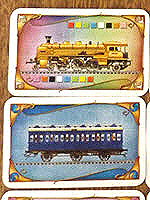
For those of you who are not familiar with Ticket to Ride, the base game has a map of the continental United States with cities connected by routes comprised of colored (or gray) rectangles. Each player starts with 45 plastic train pieces, four train cards of various colors, and one to three "destination tickets," which players are required to finish lest they lose game points. During a turn, each player has three choices: draw two cards from the river (five face-up cards in a row) or deck (or one wild card locomotive from the river); play a color set of cards to put train pieces between two cities to complete a route; or, draw three more destination tickets, keeping at least one.

As the game progresses, players accumulate cards, complete connections (which yields points depending on how many train pieces are required to finish the route), and work towards completion of their destination tickets; for instance, one destination ticket might require a player to connect Los Angeles to New York. The game ends when one player has only three or fewer train pieces remaining in his or her inventory; at that point, every other player gets one last turn. Then, the points from completed destination tickets are added to one's total, and points are subtracted for every ticket that is not completed. The highest scoring player wins.

Unlike popular pariah Monopoly (which tends to be despised by numerous board game hobbyists), Ticket to Ride does not rely on dice for movement (though randomness is an integral part of the game). Sure, Ticket to Ride involves a "river" of five cards that appear randomly from a deck, but players get to choose which cards to take and routes to build. Randomness still prevails, not only in the form of the card draw, but also in the destination tickets each player draws; yet, each player can go in the directions they want to go. As a beginner, players can focus on completing destination tickets; the more experience one gains, the more one may attempt to block their opponents from finishing their tickets. The more one plays, the more cutthroat strategies present themselves; as with many games, players benefit from experience, but with the level of randomness present in the game, any beginner has a chance to steal a victory, especially if they grok the game's intricacies quickly. In other words, unlike the dice mavens among classic American board games, Ticket to Ride provides a decision space that allows for a play style and an approach.

Since Ticket to Ride emerged in 2006, it has been one of the quintessential starter games: easy to learn, but with enough deeper strategy to suggest that there is more to board games than rolling and moving. In 2010, Ticket to Ride (and Pandemic) was my gateway into the hobby. However, since that time, thousands of games have been created. Many would argue that there are route-building, card drafting, and/or set collection games that implement those mechanics better or in more intriguing ways than Ticket to Ride. 

Should I trash or treasure Ticket to Ride?

At its weight (1.85 out of 5, according to Board Game Geek), I contend that there is no game that combines card drafting, route building and set collection more simply and elegantly than Ticket to Ride. There are some excellent heavier games like Power Grid and Brass that have implemented route building well, and there are an innumerable amount of games that involve drafting and set collection, but Ticket to Ride is the one that anyone can use as a launchpad into those more complex games. Even more important that that, Ticket to Ride is a gorgeous production from Days of Wonder, which has proven to be a brand that emphasizes art and beauty, even at the expense of game design (especially in their more recent designs as of late 2021), and Ticket to Ride is no exception. It's pretty to behold, the maps are fascinating with their little artsy flourishes, and every card is intricately drawn with steampunk Victorian inspiration. Ticket to Ride truly represents the best of gateway game design and execution.

I have been tempted to sell Ticket to Ride because I own 70 other games that I want to play at any given time. Yet, if I'm hosting guests and they are relatively new to hobby board gaming, Ticket to Ride is one of those staples that I am happy to present to those guests. Admittedly, I sold my base Ticket to Ride in favor of buying Ticket to Ride Europe just to get stations, but I still own some form of Ticket to Ride. Thus, I treasure Ticket to Ride.

Should you trash or treasure Ticket to Ride?

If you own it, I strongly recommend treasuring it. Why not? Not all of your friends (I hope) are hobby gamers, so Ticket to Ride is invaluable for connecting with them.

If you don't own it, go buy it. Funnily enough, it can be found everywhere: in big-box stores like Target, online through Amazon, and even in the discount retail stores.

***

I really don't think there has been a true replacement for Ticket to Ride. You could convince me otherwise in the comments section, but it's a rare design that can only be imitated, not replaced.

Tuesday, October 5, 2021

Should You Scratch the Board Game Gem Purchase Itch?

Several weeks ago, I played a board game called The Lost Ruins of Arnak, published by Czech Games. A beautifully colorful mishmash of deck-building and worker placement mechanism, the game involves exploring a stereotypically tropical locale for tablets, gold, arrowheads, and rubies, all the while researching a lost civilization and encountering powerful guardians. Thematically, the game leans heavily on the Indiana Jones adventure trope; this is not a knock against the game, though... Despite the decidedly apparent Euro-game elements, the theme shone through the mechanisms and, along with the superior art, evoked the thrills of the adventures of the man with the whip and fedora.

As my time with the game concluded, I found myself pondering familiar thoughts, specifically the itch-till-it-is-scratched desire to purchase this gem of a game. Yet, two counterthoughts caused me to pause: one was the acknowledgment that I already own a game like this called Dune Imperium; the other thought was the gnawing feeling that I have many great games I rarely have time to play. Both thoughts bolstered each other like a world-class beach volleyball duo; one thought set the ball, and the other spiked it. In the past, my thoughts would dig out the spike, but this time I was thankful they did not.

If you do not follow the metaphor, I'll state it plainly: I have so many great games that the urge NOT to buy more games has become stronger. When I first became interested in hobby board games, I followed the trajectory of a new enthusiast in the spring of his hobby: every time I played a new game, I made it my business to purchase it (as well as some of its expansions). I started with the classic "gateway" games; in fact, my first game was Ticket to Ride, which is as quintessential a gateway game as it gets. Next, it was Carcassonne, Settlers of Canaan (not Catan), Pandemic, and Alhambra. Then, I used a list of the past Spiel des Jahres winners (one of the prestigious board game design awards) as my roadmap to guide my purchases. Fast-forward to now and I own some of the most highly-ranked games on Boardgamegeek.com. I do not say that to brag as much as to demonstrate that I have done much to build a reasonably sizable collection of 60-70 good-to-excellent board and card games.

I have been collecting and playing these connoisseur board games for over 10 years. I have sold some and kept many, but now I view my collection as replete with fine options that I have little impetus to expand. This is not to say that I do not enjoy them; quite the opposite, I enjoy all of them. Yet, when a new game is released, I remind myself that I must own a very similar game to that new one. For instance, when I encounter a game like The Lost Ruins of Arnak, I force myself to compare it to other games in my inventory. Considering my somewhat eclectic collection, I often find a game that approximates the new one. In this case, I own Dune Imperium, which, like The Lost Ruins of Arnak, is a deckbuilder with worker placement elements and a game board. Sure, the themes are markedly different (Indiana Jones exploration versus Landsraad conflict), but the mechanics feel close enough not to justify a purchase (for me, anyway).

...Or doesn't it? The internal conflict of many board gamers is whether to stratch that gem purchase itch or not. It's like any other hobby, I suppose: if you are interested in kayaking, for instance, you buy a starter kayak, then a kayak with more features, and then better paddles, a customized seat, a flashy life-vest, and other accoutrements. Soon enough, you realize that you no longer ride that old kayak or use those old paddles (oars?); they just sit on the shelf. For board gamers, though, the problem is compounded because (and this may be a novel idea for some) the old games were not really supplanted by the new games.

Think about it... Let's say you still own those classic gateway games. Did any game really replace Ticket to Ride? If you have a game that truly replaced the theme and mechanics of Ticket to Ride, why not sell or offload Ticket to Ride? Why keep both? If both games are different yet similar, what is compelling you to keep them? Do you have time to play both? There are so many questions that one should ask oneself when facing a purchasing dilemma. Sadly, there is no one right answer when it comes to scratching that gem purchase itch. For me, though, I have a limited amount of time and a lot of great games that cover my favorite themes and mechanics. Why buy a new game that does what one of my current games does?

Over the course of the next several (or more) articles, I aim to revisit the "old" games of my collection. I will ask the questions I posed above, hoping to equip you with the tools you need to make prudent buying decisions. Sure, we should support the board gaming industry. Yes, it is okay to buy a (or numerous) board games, especially if it's within your personal budget (don't use your rent or utility money - that's my recommendation). However, whenever I stare at Yokohama or Lorenzo il Magnifico on my shelf, I lament at how I have not had the chance to dive into the strategic intricacies of the games I have. Why buy more when I have a lot of great ones?

Thursday, September 10, 2020

What to Do If... You Want to Buy Yet Another Board Game

Imagine the scene: it is a gorgeous Saturday afternoon and three of your board game buddies visit you at your house. Your wife and kids are at a relative's house, so you have the house completely open. After the cursory hellos and opening refreshments, everyone meanders somewhat swiftly to your dining room table to play a somewhat complicated, but richly-thematic, board game. After a 15-minute explanation by the owner, you and your friends engage in what turns out to be a very enthralling round of gaming. Excited by the discovery (though mindful of your usual, well-known pattern of purchasing every board game you remotely enjoy), you remember the game, about which you cannot stop talking with your friends. The day ends on a high note as your buddies conclude a session with another intriguing, but somewhat less absorbing, board game.

Shortly after the last friend leaves, your family returns home. Without hesitation, you share your gaming experience with your wife, who rolls her eyes as if to say, "You want ANOTHER board game?"

...To which you quietly nod, as if communicating telepathically, "Yes!"

Whether you are a man or woman, you have probably experienced a similar exchange with your spouse; such is the life of an enthusiast of any hobby -- in this case, an enthusiast of board games. Yet, another scenario often plays out: you acquire the wonderful game only to attempt to teach your family or another group of friends and encounter a markedly non-positive response. They just do not like it. Now, you are stuck with a game that nobody else enjoys in your immediate social circle and your only chance of ever playing it again would be if you reconvened the original group, which (for whatever reason) is a very occasional occurrence. To augment your nascent depression, your spouse often (but lovingly) reminds you of how your hobby has once again led you to possess another fancy paperweight/shelf decoration/space-taking white elephant. 

...This may also sound familiar.

If it is not obvious, I have purchased games my family does not like more than once. This experience motivates me to spare you that same fate. I shall share some questions I ask myself whenever I am exposed to a game that I am tempted to buy. I must admit that thought I often refrain from making a frivolous acquisition, I do succumb to the occasional purchase.

What is appealing about this game?
Whether it is because of theme, mechanics, popularity, or even the fun time you had playing this game with your gamer friends, it is extremely helpful to identify, isolate, and analyze the reasons why the game appeals to you. These reasons help in answering the questions after this one.

What games do I already have that are similar to this one?
Compare the game you want to buy with the ones you have in your collection. If you have games of a similar theme, figure out what differentiates this potential purchase from the games you own. If you have games with similar mechanics, determine if the other factors differentiate the potential purchase enough to justify buying it. I have ruled out a few games because they were almost the same as games I already had. You also have to resist the "cult of the new" temptation of buying something simply because it is novel; new becomes old really fast, so a game should have more to it than just being new.

How often will I play this game?
For those folks that are relative rookies in the board gaming hobby, you will most likely play your modest inventory of games often. However, for those who have been in the hobby for more than a few years, every new purchase may take time away from your other games. This is affected by other factors: the expected time-per-player number, the complexity of the game, the amount of players the game accommodates, and the whether a game involves turn-based or simultaneous play represent aspects of games that can affect how often a game is played. If you have a bevy of 3-4-player games and the new one is in that player count, the new game may compete with the others for time. If the new game is a short one (say, 30-60 minutes maximum), it may slot into a gaming night agenda with other games. Cogitate seriously about how often you can play the new game, especially in light of the next question...

Will this game take away from time spent on the other games I own?
The tragic irony of any hobby is that the more you buy new things, the less you use the older things, and board games are no different. This is evident a few years after you become an enthusiast; you start out buying gateway games like Ticket to Ride or Pandemic, but as you acquire more games, you find that you are playing those gateway games much less. Eventually, the games you purchased 10 years ago only come out when you happen to invite casual players to your gaming parties or lunchtime gatherings.

Another situation you may encounter is when you play a beloved game less and less because of the other games; you would love to set up that beloved game, but you find yourself drawn to the more recently-bought ones. When you consider that new game, think about how often those old games will get played and if you even care. If you care, you may want to ponder how much you want the new game.

What games would I offload to make room for this one? Whether you have a vibrant local community of gamers to whom you can offer and sell your old games, you are an avid eBay user who markets your games, or an extremely generous friend who offloads games onto unsuspecting friends and family members, ridding yourself of old games creates space in your inventory, which may facilitate that new purchase. Opening up slots in your gaming shelf also addresses the previous questions; by eliminating certain games, you create more time play the new game while possibly erasing games with similar themes or mechanics from your collection. If you are not a seller or giver, though, the next question is crucial...

Would my family or friends really play this game?
Let us imagine that you have gotten this far in reflecting on why to buy that intriguingly novel game. Even though you have games that are strikingly similar to this new one, and you are perfectly fine with apportioning time to your other games while accommodating this game in your group's playing schedule, you have to ask yourself the most essential question of if your family and/or friends will play this game at all. Some may argue that even playing ONE time is justification enough; think about how four matinee tickets to a movie can set you back $28, which can also be the price of a game on sale and you will understand that point. Others may argue that they have multiple gaming groups and the new game will address one or more of those groups; if so, then buy it without any reservations.

Yet, I really recommend asking yourself honestly if your primary group is going to play the game. My primary group is my family; sadly, as the years have gone by and my sons have become teenagers who are NOT that interested in board games, there is much less enthusiasm to play games in my house. I have had to accept the harsh reality that unless I find a consistent gaming group, I would be hard-pressed to condone acquiring new games. If you are facing that reality, or an analogous one that may involve the dissolution of your gaming group or the common life changes that draw your gaming buddies away from the table (e.g. marriage, new baby, new job, and so on), then buying games may not be reasonable.

For game collectors: some people love to acquire new games just to put on their shelves and enjoy the mere fact of owning them. To those folks, I thank you for supporting the hobby. This article largely does not apply to you, particularly if you have the spare income to engage in collecting board games. Keep in mind, of course, that few games appreciate in value as collector items. Sure, if you own the first edition of the Dune board game in Near-Mint condition or some other limited edition, then you could most likely turn a nice profit compared to the original purchase price.

Outside of those exceptions, board games are generally not collectibles that rise or fall in the secondary market (in my experience) like baseball cards or comic books. Despite that, if you like buying beautiful games that instill that pride of ownership (and you are buying comfortably within your family's budget), then feel free to exercise your rights as a consumer.

***

I consider the thought process of whether or not to purchase a game as an algorithm that can either spare you from needlessly spending thousands of dollars or (in a few cases) complicate the buying process enough to dissuade you from buying anything. Nowadays, as a 10-year veteran of the hobby, I walk into board game stores and either buy expansions, card sleeves, or nothing at all because I really want to play the games I already own. Whenever I am tempted to buy, I run the algorithm through my mind. Ultimately, I do enjoy buying board games, which is a tendency that is turning me more into a collector than a player, which is somewhat tragic. It is like buying nice tools just to mount on a garage wall, or buying a sports car just to wipe it occasionally with a cheese cloth and gawk at it; indeed, having it is pleasurable, but I am not allowing the item to serve its purpose. That leads into grander questions about art and decoration; why have such things in your house if all they do is sit there? To that, I say this: isn't life better when your home environment is just a little prettier? If you elevate (or reduce?) board games to art or decoration, then no amount of questions can really stop someone from buying that odd board game once in a while.

Monday, July 29, 2019

What to Do If... You Don't Want to Play Gateway Games (But You're Playing with Casuals)

As a board game enthusiast, it can be challenging to play with people who aren't enthusiasts. Such folks are often called "casual players" or just "casuals." It's a term that is somewhat pervasive in American vernacular when discussing people who only engage in an activity occasionally. This is especially the case with board games because most people do not pursue this hobby with the kind of passion to drive them to play regularly. However, for the board game enthusiast, herein lies the rub: more often than not, you get a hankering to play a board game (particularly a somewhat complicated one), but the only people that are readily available are casuals, whether they're co-workers, friends, or family members, so you assume the challenge of teaching casuals how to play a reasonably difficult game. Of course, many of us know how this ends: lots of blank expressions, yawns, head scratches, and a general desire for the casuals to extricate themselves from this train-wreck game session as expeditiously as possible.

This scenario is not uncommon, and it is one I've encountered several times, but what undergirds these situations is that apparent gap of interest and understanding between the enthusiast and the casual. Thankfully, unlike with sports in which differences in ability can result in lopsided victories and un-fun to be had by all parties, board games exist at varying levels of complexity. Among board gamers, games that are somewhat strategically rich and a cut above Monopoly are called "gateway games" with simple rules, short setup, and a sense of agency that differs greatly from the likes of Candy Land and Chutes and Ladders, to be sure. Games like Ticket to Ride, Carcassonne, Pandemic, and Settlers of Catan inhabit this ideological space of gaming. Now, don't get me wrong; these games are fun and a credit to the hobby, but there are times when the board game enthusiast wants more out of the gaming session than these games, which leads me to the crux of this article.

Here are some approaches you might try if you have a group of casual players, but do not want to play gateway games:

Research and Buy a New Game
If you navigate to Board Game Geek, you can view lists of how enthusiasts rate games. One list that is relevant to the kinds of games that casuals may enjoy is the Family Games list. On that list, you will find the classic gateway games, as well as some of the newer titles. My advice with this list is to find 3-5 games that catch your fancy and read reviews about them. They may be games that are less complex than what you truly desire, but you may find some gems that both are new to you and satisfy your urge for something more than gateway games.

Besides Board Game Geek, I recommend visiting Target, Barnes & Noble (if you're in the United States), or even the local board game specialty store. At Target, browse the "Strategy Games" section; at Barnes & Noble, browse the titles and find one that is thematically and mechanically appealing; and, at your local game store, ask the counter person (or owner) about their recommendations.

If you do NOT want to buy a new game...

Make Your Shortlist
In your existing collection, rule out the gateway offerings that you may have, but also think about your experiences with each game and consider your personal assessment of their levels of difficulty. Then, cull down all of the initial candidate games to a list of five to seven games that you would really like to play.

Look at Time and Player Count
Then, without much thought, examine your list while looking at only two criteria: time to play (which is sometimes calculated as a minutes-to-player ratio) and player count. Player count is important because you have to accommodate your entire group of casual-player friends, but expected time of play for each player is not necessarily crucial as a determinant for the length of your game session as much as an indirect indication of complexity; basically, the longer the game, the more complex it might be. This isn't a foolproof method of checking complexity, but this metric does give you some idea.

Determine the Game's Complexity
The beauty of gateway games is that though they are strategically rich, they are not painfully complicated. Many of these games have simple rulesets. For example, Carcassonne's turn order is easy to grasp: draw a tile, place one of your tile's edges against a compatible edge, and then choose whether or not to place an available worker on a feature of that tile. Once you understand the scoring of each feature, especially end-game farmer scoring, the mechanics of the game aren't daunting. Of course, the richness of Carcassonne lies in the discoveries players make as they gain experience. I suggest aiming for games that harness this beauty; at the very least, choose games that have a repeatable turn order and provide a reference card or sheet to help players along the way.

Consider The Number of Interwoven Mechanics
Working from the assumption that you are a board game aficionado, you are most likely aware of the mechanics of each game that you own. Is a game a deck-builder? Is it a worker-placement game? Does it involve set collection? Are there push-your-luck elements? Inherently, each identifiable game mechanic is no more intricate than any other mechanic, but some are more pervasive among casuals; for instance, set collection is a common mechanic found in many basic card games. However, I often keep in mind how many mechanics function inter-connectedly. Take Lewis & Clark; this game involves hand management and hand-building, worker placement, resource management, and even a racing element. With all of these mechanics in motion, even experienced board gamers have some initial problems with understanding the flow. Try to choose games that minimize the number of mechanics that prevail. For help with this, look up any particular game on Board Game Geek to discover how many mechanic categories are ascribed to that game.

Check Out the Components
A simple rule of thumb I use is the fewer the number of types of components involved in a game, the less complicated it probably is. For example, a game that has tokens, ships, three decks of cards, cardboard chits, dice, a game board, AND additional game props is most likely an overwhelming experience for the casual. Yet, a game with a set of dice, player pieces, two decks of cards, and a game board may seem less threatening. There is no magic number for types of components, but I generally take mental stock of what items are included in a game to decide if a game would suit my group of casual players. Despite this, watch out for games that appear simple with few components, but have cards that serve multiple purposes (e.g., Twilight Struggle), more than four types of tokens, chits, cubes, and/or bits, asymmetrical player powers, random starting board states, or a combination of these concepts.

Ponder the Attractiveness of the Theme
Let's admit it: some things may seem boring to the casual player. Trading in the Mediterranean? It had better be a visually-stunning game. Stock market trading? It had better have a lot of yelling. Space or science fiction? Make sure your group likes sci-fi. When choosing a game, think about your casual friends and what they might like. When in doubt, stick to popular tropes (Marvel, Star Wars, Disney, Star Trek, Harry Potter, or the like) or themes that are reminiscent of themes that are currently popular.

However, I have found that certain themes can backfire. For instance, though Game of Thrones and other sword-and-sorcery shows are popular, the medieval fantasy milieu is NOT for everyone and may be a turn-off. During one session when I presented Shadows over Camelot to my group, one of my not-so-casual friends quipped that the game was TOO nerdy for him, as if his traumatic memories of Dungeons & Dragons (or any other fantasy-themed game) had infected his outlook on knights and wizards. Identifying these "backfire" themes can be difficult, so I recommend adhering to the basic approach of avoiding themes that have stigmas attached to them, such as fantasy or sci-fi. I'll admit it: though nerdiness is en vogue now, some of your non-gamer friends may have no interest in stereotypically "nerdy" genres. Consider themes that are more universally relatable, such as transportation, economics, or crime.

Head-Simulate the Session
After all of your analysis, try to put yourself in the minds of your casual-player friends. Imagine conducting the gaming session with them, taking into account the non-gamerness of each person; this is the essence of head-simulation. Would they enjoy this game? Would they spend too much time asking questions? Does the game become bogged down? By doing this, you can avoid some stolid game sessions that, consequently, convince your friends that board games are boring.

Go with Your Gut
Even if one of your shortlisted games passes the various tests I have posited, I strongly advise you to rely on your "gut reaction." Sometimes, there are intangible elements to weigh, including your own ability (or inability) to teach a particular game effectively, your own qualms against a certain game, or even your past bad experiences with that game. Your intuition (i.e. your gut) should suffice in considering these things. Ultimately, if you feel that a game just won't work for your casual friends, put it back on the shelf and move on to the next game.


The hardest thing for any board game enthusiast to do is to admit that board games are just NOT the way to go when it comes to entertainment for a particular evening. I have walked into many adult gatherings with my duffle bag of games in hand, ready to expose my friends to some truly wonderful creations, but deciding not to open my duffle after all. I try to read the room, sensing if the host would be open to me hijacking the party by declaring that I'm starting a board game. Or, if I'm the host, I might detect that "odd" desire of people to "just relax" and not want to use their brains for anything besides socializing. Sure, there are awesome social games that fit this crowd (such as Two Rooms & A Boom or One Night Werewolf), but this is an article about non-gateway games for casuals... Occasionally, the best thing to do is not to play; save the games for another day when the conditions are right.

Thursday, February 11, 2016

Rules Discussion: Player Asymmetry

Player asymmetry is the concept of having each player assume a role and/or in-game abilities that differ from other players. A prime example of player asymmetry is in Pandemic, when each player assumes a role AND has abilities or enhancement that are unique vis-a-vis other players. Twilight Struggle is another great example: one side is the USA (who is always second in each action round and has its own specific cards) and the other side is the USSR (who is always first in each action round and has its own specific cards). A third example is Memoir '44, in which both players play two sides with different game abilities (particularly in the expansions) and starting positions. Eclipse also comes to mind, as you start out as a human or an alien race with a couple of special bonuses.

Player asymmetry is broader than a rule or mechanics discussion not only because it's pervasive in gaming, but also because each player works essentially under different rules from each other. The benefit of this asymmetry is variety: you can play one of two or many different roles; you have different abilities each game; you can explore different in-game strategies and tactics each game; and, even the material differs between players, whether it's pawns of various colors or other meeples. The downside, though, is that the playing field is not necessarily level and it's difficult to compare player performances when they are fundamentally dissimilar.

Do you have any thoughts on player asymmetry?