Monday, September 14, 2026

Grumpy Old Man: A New Direction for This Blog?

When I logged into Blogger this morning, I was reminded that it has almost been four years since I wrote a blog post. Initially, this was a shock, but as I thought it through, I realized that it wasn't so shocking. A lot has happened to me in four years: got a job in 2022; got very much into guitar in 2023 as a kind of mid-life crisis; turned 50 in 2024; lost the job in 2026; got a new job in 2026; and, now, I'm a grumpy old man.

That last part is a joke. 😀

Yet, as I write this post in 2026, I am less sanguine about the world, even though God is in complete control of everything going on. The emergence of AI, the weird, alarming, meteoric rise of socialism in the United States, the invasion of certain other ideologies, and the rise and fall of two presidents who made more than their share of mistakes and broke promises have tempted me to become less optimistic and more cynical about things. I have come to realize that no media outlet is even partially trustworthy, that social media is engineered to create addiction and enthrallment, and that almost all of the famous people who smile through their teeth at us are just dancing clowns for a Satanic agenda of which they are not even aware (and if they are, then we are seeing evil in real time). We can't trust anyone who tells us what to do, how the world is, and what to think. Indeed, for most people, the world may be a darker, more foreboding place.

Thankfully, and I'll just say this once in this post: we have Jesus. If you don't believe in him, read the Bible starting with the book of John. If you believe in him, then you are meant to be the light in this darkness. Do NOT let this world and the powers and principalities of darkness extinguish your light.

With all of this said, as a self-proclaimed "grumpy old man," I feel that it is more important than ever to find the little things in daily life that inspire and elevate us. With the time available to me, I will still write about the occasional board game and retro video game, but I will also talk about my reborn passion: guitar, including pedals, pickups, and potentiometers. Also, I will write about the single greatest light source, which I mentioned earlier.

I should mention that blogs and vlogs tend to be a bit self-aggrandizing, as if any one person's thoughts and feelings are more noteworthy than someone else's. Thankfully, this blog is (hopefully) anonymous, so I can share my thoughts without worrying about me boosting my reputation or standing. This is the angle from which I write: these are my musings, nothing more. If they strike a chord with you, feel free to comment. If not, you can comment as well. 


Thursday, September 22, 2022

Trash or Treasure? #3: Pandemic

Up until, say, the early 1990s, if you grew up in the United States, Canada, (maybe) Britain, and (possibly) Australia, you grew up with the popular board games, like Monopoly, Clue (or Cluedo), Scrabble, Stratego, Risk, Life, and so on. Indeed, the board game producers Parker Brothers and Milton Bradley seemed to monopolize (pun intended) our childhood board game culture. Interestingly, though, there was a surprising lack of cooperative strategic games. Sure, games like Pictionary and Taboo were cooperative party games, but there was little strategy involved, per se (note: I'm not going to argue about the tactics of Taboo, which involve knowing your teammates so that you can provide the best clues).

Pandemic was not the first cooperative strategy game; to my knowledge, Shadows over Camelot pre-dated it by three years, and dungeon crawl games existed long before that. Yet, Pandemic was certainly the most impactful in the golden age of Eurogames. Released in 2008, Pandemic is a 2-5 player game (though you could play 2-5 roles by yourself) in which each player assumes a role that grants them a unique ability. During each turn, the active player can perform up to four actions, such as moving from one city to another, or performing one or more special actions, such as removing one disease cube from an infected city per action. However, each role has abilities that bend these rules; for instance, the ever-useful Medic role can remove all of one type of disease cubes in a city with only one action.  

After the four actions are completed, the player draws two cards. Then, the player draws three City cards; the first City card drawn requires the players to put three disease cubes on the indicated city; the second City gets two cubes; and the third city gets one cube. Each city were infected with a specific disease cube depending on the region (e.g. Asia generally gets the red disease cubes). In this way, each player plays his turn, and then plays as the game's artificial intelligence (AI), so to speak. I would guess that playing as the game AI was not a novel concept, but that combined with cooperative play created a feeling that everyone was somehow creating their own problems despite themselves.

Gameplay ends when all four diseases are "cured," which results in victory for the players. If the players fail to do that before all of one particular disease's cubes (25 of them) have been deployed, the draw pile is completed depleted, or before there have been eight Outbreaks (when a city exceeds three of one disease's [color] cubes, which cases excess cubes to spread to neighboring cities), they lose. Everyone loses -- not one player... Everyone. Of course, I'm excluding several details because I want to avoid a rules explanation; the basic idea is that you win as a team, and you lose as a team, which was not a common concept, especially among the Parker Brothers and Milton Bradley games.

With an accessible theme, a one-hour play time, a low price point of around $30 USD in 2008, and a smaller box than a lot of the connoisseur games out at the time, Pandemic ascended to the throne of quintessential gateway co-op board game. The first release featured wooden cubes (which seemed just so en vogue at the time), sleek and simple art, and (later on) an expansion that added a "Bio-Terrorist" role and a purple-colored disease. The ascension of Pandemic was such that stores like Target and Barnes & Noble prominently displayed it in their game aisles. My first exposure to it was in 2010 when a few friends at work invited me to play with them during the lunch break. Instantly, I realized the family potential of it; even my young sons could play and enjoy it. When I purchased it and brought it home, my boys appreciated it, though my wife found the theme (and the rapid spread of disease cubes) disconcerting and unenjoyable. Nonetheless, I comprehended the impact of Pandemic in hobby gaming.

As of 2022, there are numerous co-op offerings, such as Gloomhaven, Battlestar Galactica, Robinson Crusoe, Saboteur, Forbidden Island/Desert, and the aforementioned Shadows over Camelot; there are team versus team co-op games like Captain Sonar and Specter Ops; and there are versions of Pandemic that involve making permanent changes to the cards and game board, such as Pandemic Legacy.

Should I trash or treasure Pandemic?

At a Game Weight of 2.47 on Board Game Geek, Pandemic is challenging enough for seasoned gamers to enjoy, yet easy enough to learn to attract casual gamers. It can be played in an hour, which may be a great transition game between two more complex games or the primer game before the multi-hour game starts. Whatever the case, Pandemic is often a suitable choice for any game night.

If I am really hankering to play a cooperative game, though, I prefer the deeper Robinson Crusoe, which has so much going for it: superlative art, lots of mechanics at work, and a weird sense of foreboding that reminds me of the television show Lost (minus the Smoke Monster). An amusing semi-cooperative game I also favor is Between Two Castles of Mad King Ludwig, which compels you to cooperate with your neighbors, but not TOO much.

Because my copies of Pandemic and the expansion are vintage, first-edition versions, I will not be selling them. That iteration of Pandemic is a work of art and fun to unpack and set up. Occasionally, I bring it out to teach Gen Xers and Millennials how co-op games work. There is no shame in keeping this classic, and the box (even with the expansion) is still slimmer than many of my other games, so it doesn't take up much space.

Should you trash or treasure Pandemic?

For the first two games I discussed in this Trash or Treasure series, I could not convince myself to recommend trashing them... and I still cannot suggest trashing Pandemic. It is the archetypal cooperative game that serves as a fine gateway into a world of tying your success or failure with other players. There are some wonderful gateway games you could acquire, such as Forbidden Island or Forbidden Desert, which just so happen to be designed by Matt Leacock, who designed Pandemic. Either one of those games boast more whimsical themes, adorable miniatures, and sweet tin boxes instead of cardboard boxes. Yet, I ended up selling my copy of Forbidden Desert because, well, I own Pandemic. Thus, I have little choice but to advise you to treasure it.

Despite that, if you own Pandemic, I would venture a guess and say that you may not miss it if you gave it away or donated it. There are many other cooperative games that are good gateway games, fine complex games, or even more cutthroat team versus team games. I am tempted to argue that Pandemic is a bit vanilla, but a game that revolves around disease is just a bit too topical nowadays. In any case, there are enough choices out there to find a co-op game that appeals to you thematically.

***

One more thing: due to the ubiquity of Pandemic, you would be hard-pressed to sell it for profit. Most people can purchase it locally at a big-box store, so paying shipping to buy a used copy may not make economic sense. Consider donating it at a thrift store to spread the hobby to others. You may have a friend who is new to the hobby; you could teach Pandemic to that friend and give him the copy. Regard Pandemic as a powerful way to open people up to hobby board gaming, so it would be worthwhile to give it away.

Saturday, September 17, 2022

What to Do If... A Game is Just So Adorable?!

Castles of Burgundy is widely considered one of the best strategy games in the board game hobby and designer Stefan Feld's masterpiece. Ranked at 19 on Board Game Geek's website, Castles of Burgundy combines dice, tile placement, and lots of ways to score to form a tight puzzle of a game with just enough player interaction not to feel like you are playing Solitaire on an airplane tray table. If you have not had a chance to play it, get online, find a copy of the game, and spend the requisite $30 to buy it right now... Don't wait - - it's worth your time.

Now, if you have played it before, or if you just received it through Amazon Prime shipping and you are punching out the tiles, you know that this game is as homely as it is well-designed. With sketchy (literally) art, floppy card stock, and enough beige to make a medieval monk blush. Oh, and must I mention that the theme is as pasted-on as your novelty version of Monopoly? For as much craft and care was infused in the rules and tactics, very little emphasis was placed on the art design as if Mr. Feld truly didn't want anything beautiful to distract the players. Castles of Burgundy is as vanilla as it gets (but I believe that was intentional, even by early 2000s game art standards).

Fast forward twenty or so years to 2022. Art standards and production values continue to surge upward. Kickstarter, Gamefound, and other crowdfunding sites are replete with games that feature meticulously molded figures, vivid card art, and high-quality paper with just the right rigidity and thickness. One would be hard-pressed to find any (successful) game on a crowdfunding site that does not boast incredible illustrations and highly detailed miniatures. Likewise, established game producers like Asmodee, Z-Man Games, and Gale Force Nine Games (I'm kind of excluding Queen Games and Alea/Ravensburger here... They sometime err on the side of bland) undeniably pursue artistic excellence when it comes to board games. Conversely, I can only imagine the number of games that may have some ingenious mechanics or brilliant game design that end up falling to the wayside because the designer (possibly Queen Games or Alea/Ravensburger) did not have the business acumen or foresight (which would be mildly ironic for a strategic game designer not to predict marketplace failure) to hire an artist who was not her cousin or dodgy neighbor with a community college arts degree (not to denigrate people with community colleges). To state it simply, in the world of board games, art tends to cover the warts of mediocre game design much more than superior game design obfuscates cheesy drawings.

In any case, that is not the precise point of this article, though the point is still relevant. Actually, I am looking at those board (and card) games that possess an affable quality -- a certain je-ne-sais-quoi --that I can only identify as "cute." If you saw these kinds of games, you'd know what I am talking about. Here's a classic example: Carcassonne. Yeah, that tile-laying game with the "meeples" that, for a time, became ubiquitous as other games appropriated these pieces. There is just something so adorable about putting a meeple on a bucolic field tile as if it is having a rest. If you look closely at the tile, you might spy sheep frolicking in the countryside. Another cute game (in my estimation) is Boss Monster. I relish looking at those 8-bit-rendered heroes and villains; it sends me back to those days when I would play Legend of Zelda on my Nintendo, and then slam my controller down in frustration as Link died due to some suspect maneuver (Okay, calm down, calm down...). A lot of the Tiny Epic games are lovable with their tiny zombies, motorcycles, and weapons. Have you seen the illustrations of Belfort or Harbour (goodbye, Tasty Minstrel Games)? I even find the animeeples of Agricola scrumptious with those sheepish little sheep and the cows that look so at-home in your house (or in your Cooking Hearth).

There are a ton of examples of cuteness in board games, whether it is a small aspect of the game or a greater part of its design (Bunny Kingdom or Stuffed Fables, anyone?). Sadly, though, cuteness has a way of covering up the gangrene underneath... Okay, that's a bit extreme, but it is similar to the point I made earlier: beauty covers up poor game design (perfume on a pig?) much more effectively than great game design covers up blandness. Some games can win you over with something that you could figuratively hug and squeeze with overflowing affection. It is only when you have purchased such a game, unpacked it, and played it to realize that you have been seduced by cuteness. So, what do you do if a game is just so adorable? Here are my tips...

If you haven't bought it, research it.

This is a no-brainer, but sometimes we have to pause, take a beat, and think about the game. There are quite a few games that look great on the store shelf. You may examine the board game box and feel drawn to a bunny or a teddy bear on the cover. Look up the game on Board Game Geek immediately on your smartphone (Does anyone still have dumb phones? If so, I salute you!). Read a few reviews. Then, convince yourself that the cute game is not that great. When all else fails, take a picture of that lovable element on the box, print it, frame it, and hang it in your game room as a trophy signifying your ability to overcome a questionable decision.

If you already bought it, be open to liking it.

I know there are folks out there that would have no compunction about listing cute games on eBay after one play, but I recommend playing the game a few times to determine truly if you do not like it. Just because a game is not "good" does not mean that you would not like it. If you browse Board Game Geek's website enough, you may discover numerous reviews for pretty, yet perfectly mediocre games. Let's face it: if the game is adorable enough, you might find it in your heart to overlook its flaws and embrace the art.

If you bought the game and just loathe it, consider this...

What about keeping the "cute" part of the game and discarding the rest? Maybe you can cannibalize the tokens for another game, cut the pages or cards you like and make a fun scrapbook, or even make up your own rules. I have heard stories of people rewriting the rules for a game or creating a new game with parts from another. Personally, I have been known to take the gorgeously detailed coins out of one game and use them for another.

***

Ultimately, to quote some random Star Wars character, "do not be seduced by the Dark side." A lot of game producers put great effort, time, and market research into crafting games that people would buy. If they are truly smart, they do their best to capture the "casual" gamer; if they can convince the "average" consumer that a cute game is a must-have item, then the game producer has done well and can be gainfully employed. She can spend her earnings at Starbucks or pay next month's rent. And, in a way, you can feel good that you have helped a starving game designer survive one more month.

When it comes down to it, game design and production is a business and people are just trying to feed themselves and/or their families, so the workers in this industry endeavor to sell games, even if they are duds with a pretty coat of paint. Be discerning, take a breath, and allocate times towards researching. I told my sons the same thing about dating: instead of jumping into a relationship, observe, take the time to know the girl, and pray. Of course, if you can ignore the warts and psychoses, maybe a "cute" game is all you need. Just be prepared to deal with a lot of baggage (am I still talking about dating?).

Saturday, September 3, 2022

Trash or Treasure? #2: Carcassonne

Of all of the venerated gateway games, Carcassonne has to be the most elegant, yet deeply strategic game of the bunch. Each turn is simple: draw one tile from a bag or blind stack, place an edge of the tile next to a compatible edge on an already placed tile, and decide whether or not you deploy a “follower” on a feature of that tile. The edge (or center) of every tile can be part of a feature such as a city, a road, or open land in service of creating a “farm” or completing the tile spaces around a cloister (or monastery or whatever). When a follower is put on the most recently-placed tile, that follower either scores points when the city, road, or cloister is complete (and is then removed), or the follower remains on the feature until the end of the game. The base game has 72 tiles and each player has seven followers (note: an eighth follower is used for the scoring track). After the last tile is drawn and played, all incomplete features and farms (or open areas bounded by cities and roads) are scored. I won’t discuss the details of scoring, but, basically, highest score wins.

In practice, Carcassonne is fast-paced with only a three-move turn (i.e., draw, place, and put) and seems very tactical, especially at higher player counts; at four or five players, you can keep track of what is drawn, but options change with each new tile, affecting any long-range thinking. However, Carcassonne shines at two players; with only 72 total tiles to play, each player is assured 36 tiles, and as the game progresses one can anticipate which tiles might be drawn or, more crucially, which tiles are no longer available. This leads to creating game states in which it is rendered impossible for the opponent to complete a feature, thus locking up their follower (in a city fragment, for instance) for the rest of game. In turn, this limits the opponent’s scoring opportunties.

When I started out in the board game hobby, after Ticket to Ride, I tried Carcassonne -- not the base game, mind you, but the base game with the Inns & Cathedrals and Traders & Builders expansions, which added goods scoring, different buildings, and more specialized followers. My first game was played during a lunch with three other people. Because I had no familiarity with the tile inventory, the game felt tactical, and yet if I watched enough features, I could build out multiple scoring opportunities by waiting for the right tile. As time passed, I purchased Carcassonne for myself, as well as FOUR expansions I really enjoyed, and would play protracted games of Carcassonne with no less than six players (one expansion provided another set of followers for a sixth player). One particular expansion, The Princess & The Dragon, introduced the Dragon, which was moved by whomever drew a volcano tile, and then by every other player. Whenever the Dragon was placed through another player’s incomplete feature, that player’s follower was removed and given back to the player. This led to chaotic games during which NOBODY could make any long-range plans and had to focus on completing and scoring roads and cities quickly.

By my reckoning, Carcassonne was the first tile-laying game of its kind in which players collectively constructed the board and scored based on how they constructed it. In 2000, Carcassonne must have been a revelation as it won the coveted Spiel des Jahres -- an award given to the game and designer who created the most innovative family game of the year. Since that time, tile-laying games have become much less uncommon; three years later, in 2003, Alhambra would win the Spiel des Jahres with a variation of tile-laying in which players purchased their tiles and built out their own palaces. Games like Alhambra, Kingdomino, Isle of Skye, Patchwork, Calico, Cascadia, The Castles of Mad King Ludwig, and Suburbia employ the tile-laying mechanism with varying degrees of complexity and interwoven game mechanics.

Should I trash or treasure Carcassonne?

At its weight (1.80 out of 5, according to Board Game Geek), Carcassonne snatches the catchphrase of “a minute to learn, (but) a lifetime to master” out of Othello’s figuratively grubby little hands. Very few games take a simple turn structure and turn it into a brutal combination of take-that, one-uppsmanship, and analysis paralysis like this game. At higher play counts and with more expansions, Carcassonne can descend into near-party-game madness; at lower player counts, the game becomes tighter, more strategic, and more cutthroat. It takes several plays to realize this dichotomy between tactical group play and strategic one-on-one maneuvering, but the more Carcassonne is played, the more depth is surprisingly revealed.

As I mentioned earlier, the tile-laying mechanic has had time to percolate and mature, so there is a panoply of choices now available. As of 2022, Cascadia emerged as a hexagonal tile layer in which you build out your own landscape and place one of several animal tokens on any open hex that can accommodate the animal token. With a scoring system that changes with each game, Cascadia has a variability that is not present in Carcassonne’s scoring system. At first blush, it would appear that a game like Cascadia is “doing it better” than Carcassonne...

Yet, in my mind, Carcassonne is STILL the finest tile-layer of its kind at the two-player or three-player count. The tiles are cutely drawn (if I can even insinuate that this game is “cute”), the followers (which we all know now as “meeples”) are iconic pieces in the board gaming world, and heinous crimes against humanity that can be perpetrated on a shared map instills a level of interaction absent in many of the games I mentioned. Carcassonne also transforms into an engaging party game with seven or even eight players (buy more pieces!). Carcassonne is a strategic gem, especially if your opponent knows the inventory of tiles as well as you do.

Though I have considered selling Carcassonne and all of the expansions and mini-expansions I have collected, I always convince myself NOT to trash this masterpiece. I thoroughly enjoy Alhambra and am growing to like Cascadia (and I have the quasi-team-oriented Between Two Castles of Mad King Ludwig), but Carcassonne has a undefinable whimsy to it. Maybe it’s the adorable followers, or maybe it’s that particular shade of green on all of the field tiles. I dunno...

No, I do know! I’m treasuring this one.

Should you trash or treasure Carcassonne?

If you own Carcassonne, I have to be honest and say that it is your judgment call. I do recommend treasuring it, but there are enough casual-level tile-layers out there that you can choose one of the games I mentioned and use THAT as the entry point into gaming for your non-gamer friends. There are also other themes out there; if medieval landscape building is not your thing, why not build a city in Suburbia? Or build a space station with Among the Stars? Thus, trashing Carcassonne is really up to preference.

If you don't own it, buying the base game would not set you back more than, say, $25 US. I strongly suggest sticking with the base set unless you REALLY enjoy it. Not as ubiquitous as Ticket to Ride, Carcassonne can be found in some big-box stores like Target and Barnes & Noble, online through Amazon, and, of course, the local game store. However, places like Walmart do not carry Carcassonne (unless it’s a fluke).

***

Unlike Ticket to Ride, I can argue that games have come along with different themes that may compel you to buy something besides Carcassonne. For me, though, this game will always have a special place in my heart, and is one that is still visually appealing and cute. Nowadays, the art has been revamped; it’s very attractive art, but I still prefer the original art from the game’s Rio Grande Games days.

Tuesday, March 15, 2022

Reflecting on Board Game Geek's Top 20 Strategy Games List (2022 Edition)

 Wow... So, over six years ago, I wrote a brief article reflecting on Board Game Geek's Top 20 Strategy Games list. At the time, Twilight Struggle had been dethroned by Pandemic: Legacy as the number 1 game, and many other upstarts had infiltrated the list. This time, I'm going to comment on each game. I have not yet played many of them, so my comments shall be steeped in hearsay, a modicum of ignorance, and some degree of snarkiness. Here goes...

1) Gloomhaven: this one is too large, too expansive, and too expensive for me to consider. I own enough games to dissuade me from purchasing this because I want to play the games I own. If I only owned, say, 10 games, though, I'd buy this one. I buy into the hype that this faux dungeon crawler is the best game of its kind.

2) Brass: Birmingham: this one looks like a lot of fun - a real brain burner. Unfortunately, I would have very few people interested in playing this one with me.

3) Pandemic Legacy: meh. I like Pandemic, and I loathe games that require me to deface or destroy components. That's my opinion, and I'm in the United States, where speech is still (somewhat) free.

4) Twilight Imperium, Fourth Edition: like Gloomhaven, I have too many games to justify this purchase, but, boy, am I tempted! Besides, I own Star Trek: Ascendancy, and I have yet to bring that to the table.

5) Gloomhaven: Jaws of the Lion: very tempting! More condensed Gloomhaven at $40? That's a bargain.

6) Terraforming Mars: ugly card art is very dissuasive. Ares Expedition was a huge improvement in that regard, but I have enough card-driven world builders to cause me to pass on this one.

7) Gaia Project: this one is hugely tempting. Sadly, I have few opponents to play this one and it's a bit too abstract (with a pasted-on theme) to consider it.

8) Through the Ages: I own Nations and like how civilization building is condensed to three hours. If I had the 4-6 hours to play one game, I'd think about Through the Ages.

9) Great Western Trail: I own this one. It's a keeper and strongly recommended - a blend of deck-building (though not primarily so), hand management, point-to-point movement, and (dare I say) racing (at least in the latter part of the game). This is in the right spot on the list.

10) Spirit Island: I don't know much about it except the theme, which didn't excite me. Moving on.

11) Twilight Struggle: it should be top 5, period. Read any review about it and you'll read why.

12) Dune: Imperium: I own this and its expansion (Rise of Ix). It's super fun as a SOLO game, and I can't wait to play it with people. I also can't stop buying third-party components to beautify it. I'm not sure if it should be 11 on this list; it's definitely top 30.

13) Scythe: it masquerades as a "dudes on a map" game, but it boils down to efficiency and resource management. The first 15 turns feel slow and deliberate, but things can escalate quickly. The theme is gorgeous, but somewhat pasted on. I own this and two of its expansions. Scythe could be top 8.

14) Brass: Lancashire: looks awesome; seems deliciously complex. Once again, though, I don't have an audience for this one.

15) Castles of Burgundy: what can be said about this one? I own and love it, even though it's as ugly as other games from its time. Stefan Feld performed some serious alchemy to create this gem.

16) Eclipse: Second Dawn of the Galaxy: if this were even possible to acquire at a decent price in the U.S., I'd break my own acquisition guidelines and buy it! The second iteration is lovely and the game trays look stellar (pun intended)! It's shorter and more Euro-like than Twilight Imperium.

17) A Feast for Odin: I'd love to acquire this one, but I have vowed to sell another Uwe Rosenberg game before I purchase a new one. Hmm... I still think Glass Road is Rosenberg's masterpiece.

18) Concordia: if it weren't for having to "seek the favor of gods," I'd jump at this one. It replaces a few games on my shelf, conceivably. (Update: upon further examination, I chose to buy this one. The "seeking the favor of the gods" aspect is nothing but set collection. No worshiping here.)

19) Terra Mystica: I don't like the theme, and I'd rather get Gaia Project, anyway.

20) 7 Wonders Duel: I may be ignorant about this one, but really?! It's number 20 on the Strategy list?

The also-rans at 21-25 include Orleans, Wingspan, Barrage, Food Chain Magnate, and Viticulture - all great titles to be sure. I wouldn't put Wingspan so high up on the Strategy list, but I can definitely declare that it's one of my personal top 15 games. Also, Food Chain Magnate should be much higher, maybe top 10; because it's somewhat expensive for what you get (the art, though cute and cheeky, doesn't justify the cost) and not easy to acquire, I'm sure many folks have not had a chance to play. Like an independent dramatic film that receives an Oscar nomination, only a small market has truly gotten to appreciate it.

Here are a few more thoughts I have about other games on the list:

  • Lost Ruins of Arnak is an awesomely designed and beautiful game, but it shouldn't be on the Strategy list at 28.
  • Caverna is at 35 and Agricola is at 43... Way too low for either title.
  • Puerto Rico is a personal favorite, and I have no problem with it at 39. It hasn't aged that well; there are many more excellent strategy games.
  • Tzolk'in is at 46, but should be higher. It's a worker placement game that rewards patience; you pull your workers too early and you miss out on better goods or benefits. Plus, you have to think turns ahead to anticipate when you would need those better items.
  • Le Havre should be higher up the list than 49, though some have said that it's a solved game (steel strategy?)
  • Power Grid at 51... Hmm, sure.
  • Mombasa (at 66) has slid down about 30 places compared to a few years ago, but (outside of the theme) this game is a gem.
  • I'm willing to accept 7 Wonders at 73 on this list. It's my go-to Next Step game.
  • Isn't Trajan just too clunky (compared to games now) to be at 80?
  • Wow, Watergate is at 95...
  • Glass Road, Lewis & Clark, and Robinson Crusoe belong in the top 100.
  • Two-player Carcassonne with the base set only is supremely strategic; it would be top 20 easy.

That's it for my opinions. What are your thoughts?

Saturday, December 18, 2021

Trash or Treasure? #1: Ticket to Ride

This article is the first in a series of Trash or Treasure articles that explore connoisseur board games from the not-so-distant past that were once innovative, but now have receded into "classic" status as subsequent games have been designed and refined over time based on those past innovations. 

For many board game enthusiasts, Ticket to Ride was the gateway game that led them into the hobby. With a bit of hand management, some set collection, and a lot of route building, Ticket to Ride brought something to the table that American games like Monopoly, Sorry, or even Clue could not do: introduce a stronger sense of agency by not using dice. 

For those of you who are not familiar with Ticket to Ride, the base game has a map of the continental United States with cities connected by routes comprised of colored (or gray) rectangles. Each player starts with 45 plastic train pieces, four train cards of various colors, and one to three "destination tickets," which players are required to finish lest they lose game points. During a turn, each player has three choices: draw two cards from the river (five face-up cards in a row) or deck (or one wild card locomotive from the river); play a color set of cards to put train pieces between two cities to complete a route; or, draw three more destination tickets, keeping at least one.

As the game progresses, players accumulate cards, complete connections (which yields points depending on how many train pieces are required to finish the route), and work towards completion of their destination tickets; for instance, one destination ticket might require a player to connect Los Angeles to New York. The game ends when one player has only three or fewer train pieces remaining in his or her inventory; at that point, every other player gets one last turn. Then, the points from completed destination tickets are added to one's total, and points are subtracted for every ticket that is not completed. The highest scoring player wins.

Unlike popular pariah Monopoly (which tends to be despised by numerous board game hobbyists), Ticket to Ride does not rely on dice for movement (though randomness is an integral part of the game). Sure, Ticket to Ride involves a "river" of five cards that appear randomly from a deck, but players get to choose which cards to take and routes to build. Randomness still prevails, not only in the form of the card draw, but also in the destination tickets each player draws; yet, each player can go in the directions they want to go. As a beginner, players can focus on completing destination tickets; the more experience one gains, the more one may attempt to block their opponents from finishing their tickets. The more one plays, the more cutthroat strategies present themselves; as with many games, players benefit from experience, but with the level of randomness present in the game, any beginner has a chance to steal a victory, especially if they grok the game's intricacies quickly. In other words, unlike the dice mavens among classic American board games, Ticket to Ride provides a decision space that allows for a play style and an approach.

Since Ticket to Ride emerged in 2006, it has been one of the quintessential starter games: easy to learn, but with enough deeper strategy to suggest that there is more to board games than rolling and moving. In 2010, Ticket to Ride (and Pandemic) was my gateway into the hobby. However, since that time, thousands of games have been created. Many would argue that there are route-building, card drafting, and/or set collection games that implement those mechanics better or in more intriguing ways than Ticket to Ride. 

Should I trash or treasure Ticket to Ride?

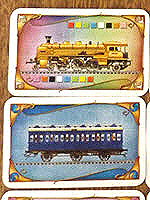
At its weight (1.85 out of 5, according to Board Game Geek), I contend that there is no game that combines card drafting, route building and set collection more simply and elegantly than Ticket to Ride. There are some excellent heavier games like Power Grid and Brass that have implemented route building well, and there are an innumerable amount of games that involve drafting and set collection, but Ticket to Ride is the one that anyone can use as a launchpad into those more complex games. Even more important that that, Ticket to Ride is a gorgeous production from Days of Wonder, which has proven to be a brand that emphasizes art and beauty, even at the expense of game design (especially in their more recent designs as of late 2021), and Ticket to Ride is no exception. It's pretty to behold, the maps are fascinating with their little artsy flourishes, and every card is intricately drawn with steampunk Victorian inspiration. Ticket to Ride truly represents the best of gateway game design and execution.

I have been tempted to sell Ticket to Ride because I own 70 other games that I want to play at any given time. Yet, if I'm hosting guests and they are relatively new to hobby board gaming, Ticket to Ride is one of those staples that I am happy to present to those guests. Admittedly, I sold my base Ticket to Ride in favor of buying Ticket to Ride Europe just to get stations, but I still own some form of Ticket to Ride. Thus, I treasure Ticket to Ride.

Should you trash or treasure Ticket to Ride?

If you own it, I strongly recommend treasuring it. Why not? Not all of your friends (I hope) are hobby gamers, so Ticket to Ride is invaluable for connecting with them.

If you don't own it, go buy it. Funnily enough, it can be found everywhere: in big-box stores like Target, online through Amazon, and even in the discount retail stores.

***

I really don't think there has been a true replacement for Ticket to Ride. You could convince me otherwise in the comments section, but it's a rare design that can only be imitated, not replaced.

Tuesday, October 5, 2021

Should You Scratch the Board Game Gem Purchase Itch?

Several weeks ago, I played a board game called The Lost Ruins of Arnak, published by Czech Games. A beautifully colorful mishmash of deck-building and worker placement mechanism, the game involves exploring a stereotypically tropical locale for tablets, gold, arrowheads, and rubies, all the while researching a lost civilization and encountering powerful guardians. Thematically, the game leans heavily on the Indiana Jones adventure trope; this is not a knock against the game, though... Despite the decidedly apparent Euro-game elements, the theme shone through the mechanisms and, along with the superior art, evoked the thrills of the adventures of the man with the whip and fedora.

As my time with the game concluded, I found myself pondering familiar thoughts, specifically the itch-till-it-is-scratched desire to purchase this gem of a game. Yet, two counterthoughts caused me to pause: one was the acknowledgment that I already own a game like this called Dune Imperium; the other thought was the gnawing feeling that I have many great games I rarely have time to play. Both thoughts bolstered each other like a world-class beach volleyball duo; one thought set the ball, and the other spiked it. In the past, my thoughts would dig out the spike, but this time I was thankful they did not.

If you do not follow the metaphor, I'll state it plainly: I have so many great games that the urge NOT to buy more games has become stronger. When I first became interested in hobby board games, I followed the trajectory of a new enthusiast in the spring of his hobby: every time I played a new game, I made it my business to purchase it (as well as some of its expansions). I started with the classic "gateway" games; in fact, my first game was Ticket to Ride, which is as quintessential a gateway game as it gets. Next, it was Carcassonne, Settlers of Canaan (not Catan), Pandemic, and Alhambra. Then, I used a list of the past Spiel des Jahres winners (one of the prestigious board game design awards) as my roadmap to guide my purchases. Fast-forward to now and I own some of the most highly-ranked games on Boardgamegeek.com. I do not say that to brag as much as to demonstrate that I have done much to build a reasonably sizable collection of 60-70 good-to-excellent board and card games.

I have been collecting and playing these connoisseur board games for over 10 years. I have sold some and kept many, but now I view my collection as replete with fine options that I have little impetus to expand. This is not to say that I do not enjoy them; quite the opposite, I enjoy all of them. Yet, when a new game is released, I remind myself that I must own a very similar game to that new one. For instance, when I encounter a game like The Lost Ruins of Arnak, I force myself to compare it to other games in my inventory. Considering my somewhat eclectic collection, I often find a game that approximates the new one. In this case, I own Dune Imperium, which, like The Lost Ruins of Arnak, is a deckbuilder with worker placement elements and a game board. Sure, the themes are markedly different (Indiana Jones exploration versus Landsraad conflict), but the mechanics feel close enough not to justify a purchase (for me, anyway).

...Or doesn't it? The internal conflict of many board gamers is whether to stratch that gem purchase itch or not. It's like any other hobby, I suppose: if you are interested in kayaking, for instance, you buy a starter kayak, then a kayak with more features, and then better paddles, a customized seat, a flashy life-vest, and other accoutrements. Soon enough, you realize that you no longer ride that old kayak or use those old paddles (oars?); they just sit on the shelf. For board gamers, though, the problem is compounded because (and this may be a novel idea for some) the old games were not really supplanted by the new games.

Think about it... Let's say you still own those classic gateway games. Did any game really replace Ticket to Ride? If you have a game that truly replaced the theme and mechanics of Ticket to Ride, why not sell or offload Ticket to Ride? Why keep both? If both games are different yet similar, what is compelling you to keep them? Do you have time to play both? There are so many questions that one should ask oneself when facing a purchasing dilemma. Sadly, there is no one right answer when it comes to scratching that gem purchase itch. For me, though, I have a limited amount of time and a lot of great games that cover my favorite themes and mechanics. Why buy a new game that does what one of my current games does?

Over the course of the next several (or more) articles, I aim to revisit the "old" games of my collection. I will ask the questions I posed above, hoping to equip you with the tools you need to make prudent buying decisions. Sure, we should support the board gaming industry. Yes, it is okay to buy a (or numerous) board games, especially if it's within your personal budget (don't use your rent or utility money - that's my recommendation). However, whenever I stare at Yokohama or Lorenzo il Magnifico on my shelf, I lament at how I have not had the chance to dive into the strategic intricacies of the games I have. Why buy more when I have a lot of great ones?

Thursday, September 10, 2020

What to Do If... You Want to Buy Yet Another Board Game

Imagine the scene: it is a gorgeous Saturday afternoon and three of your board game buddies visit you at your house. Your wife and kids are at a relative's house, so you have the house completely open. After the cursory hellos and opening refreshments, everyone meanders somewhat swiftly to your dining room table to play a somewhat complicated, but richly-thematic, board game. After a 15-minute explanation by the owner, you and your friends engage in what turns out to be a very enthralling round of gaming. Excited by the discovery (though mindful of your usual, well-known pattern of purchasing every board game you remotely enjoy), you remember the game, about which you cannot stop talking with your friends. The day ends on a high note as your buddies conclude a session with another intriguing, but somewhat less absorbing, board game.

Shortly after the last friend leaves, your family returns home. Without hesitation, you share your gaming experience with your wife, who rolls her eyes as if to say, "You want ANOTHER board game?"

...To which you quietly nod, as if communicating telepathically, "Yes!"

Whether you are a man or woman, you have probably experienced a similar exchange with your spouse; such is the life of an enthusiast of any hobby -- in this case, an enthusiast of board games. Yet, another scenario often plays out: you acquire the wonderful game only to attempt to teach your family or another group of friends and encounter a markedly non-positive response. They just do not like it. Now, you are stuck with a game that nobody else enjoys in your immediate social circle and your only chance of ever playing it again would be if you reconvened the original group, which (for whatever reason) is a very occasional occurrence. To augment your nascent depression, your spouse often (but lovingly) reminds you of how your hobby has once again led you to possess another fancy paperweight/shelf decoration/space-taking white elephant. 

...This may also sound familiar.

If it is not obvious, I have purchased games my family does not like more than once. This experience motivates me to spare you that same fate. I shall share some questions I ask myself whenever I am exposed to a game that I am tempted to buy. I must admit that thought I often refrain from making a frivolous acquisition, I do succumb to the occasional purchase.

What is appealing about this game?
Whether it is because of theme, mechanics, popularity, or even the fun time you had playing this game with your gamer friends, it is extremely helpful to identify, isolate, and analyze the reasons why the game appeals to you. These reasons help in answering the questions after this one.

What games do I already have that are similar to this one?
Compare the game you want to buy with the ones you have in your collection. If you have games of a similar theme, figure out what differentiates this potential purchase from the games you own. If you have games with similar mechanics, determine if the other factors differentiate the potential purchase enough to justify buying it. I have ruled out a few games because they were almost the same as games I already had. You also have to resist the "cult of the new" temptation of buying something simply because it is novel; new becomes old really fast, so a game should have more to it than just being new.

How often will I play this game?
For those folks that are relative rookies in the board gaming hobby, you will most likely play your modest inventory of games often. However, for those who have been in the hobby for more than a few years, every new purchase may take time away from your other games. This is affected by other factors: the expected time-per-player number, the complexity of the game, the amount of players the game accommodates, and the whether a game involves turn-based or simultaneous play represent aspects of games that can affect how often a game is played. If you have a bevy of 3-4-player games and the new one is in that player count, the new game may compete with the others for time. If the new game is a short one (say, 30-60 minutes maximum), it may slot into a gaming night agenda with other games. Cogitate seriously about how often you can play the new game, especially in light of the next question...

Will this game take away from time spent on the other games I own?
The tragic irony of any hobby is that the more you buy new things, the less you use the older things, and board games are no different. This is evident a few years after you become an enthusiast; you start out buying gateway games like Ticket to Ride or Pandemic, but as you acquire more games, you find that you are playing those gateway games much less. Eventually, the games you purchased 10 years ago only come out when you happen to invite casual players to your gaming parties or lunchtime gatherings.

Another situation you may encounter is when you play a beloved game less and less because of the other games; you would love to set up that beloved game, but you find yourself drawn to the more recently-bought ones. When you consider that new game, think about how often those old games will get played and if you even care. If you care, you may want to ponder how much you want the new game.

What games would I offload to make room for this one? Whether you have a vibrant local community of gamers to whom you can offer and sell your old games, you are an avid eBay user who markets your games, or an extremely generous friend who offloads games onto unsuspecting friends and family members, ridding yourself of old games creates space in your inventory, which may facilitate that new purchase. Opening up slots in your gaming shelf also addresses the previous questions; by eliminating certain games, you create more time play the new game while possibly erasing games with similar themes or mechanics from your collection. If you are not a seller or giver, though, the next question is crucial...

Would my family or friends really play this game?
Let us imagine that you have gotten this far in reflecting on why to buy that intriguingly novel game. Even though you have games that are strikingly similar to this new one, and you are perfectly fine with apportioning time to your other games while accommodating this game in your group's playing schedule, you have to ask yourself the most essential question of if your family and/or friends will play this game at all. Some may argue that even playing ONE time is justification enough; think about how four matinee tickets to a movie can set you back $28, which can also be the price of a game on sale and you will understand that point. Others may argue that they have multiple gaming groups and the new game will address one or more of those groups; if so, then buy it without any reservations.

Yet, I really recommend asking yourself honestly if your primary group is going to play the game. My primary group is my family; sadly, as the years have gone by and my sons have become teenagers who are NOT that interested in board games, there is much less enthusiasm to play games in my house. I have had to accept the harsh reality that unless I find a consistent gaming group, I would be hard-pressed to condone acquiring new games. If you are facing that reality, or an analogous one that may involve the dissolution of your gaming group or the common life changes that draw your gaming buddies away from the table (e.g. marriage, new baby, new job, and so on), then buying games may not be reasonable.

For game collectors: some people love to acquire new games just to put on their shelves and enjoy the mere fact of owning them. To those folks, I thank you for supporting the hobby. This article largely does not apply to you, particularly if you have the spare income to engage in collecting board games. Keep in mind, of course, that few games appreciate in value as collector items. Sure, if you own the first edition of the Dune board game in Near-Mint condition or some other limited edition, then you could most likely turn a nice profit compared to the original purchase price.

Outside of those exceptions, board games are generally not collectibles that rise or fall in the secondary market (in my experience) like baseball cards or comic books. Despite that, if you like buying beautiful games that instill that pride of ownership (and you are buying comfortably within your family's budget), then feel free to exercise your rights as a consumer.

***

I consider the thought process of whether or not to purchase a game as an algorithm that can either spare you from needlessly spending thousands of dollars or (in a few cases) complicate the buying process enough to dissuade you from buying anything. Nowadays, as a 10-year veteran of the hobby, I walk into board game stores and either buy expansions, card sleeves, or nothing at all because I really want to play the games I already own. Whenever I am tempted to buy, I run the algorithm through my mind. Ultimately, I do enjoy buying board games, which is a tendency that is turning me more into a collector than a player, which is somewhat tragic. It is like buying nice tools just to mount on a garage wall, or buying a sports car just to wipe it occasionally with a cheese cloth and gawk at it; indeed, having it is pleasurable, but I am not allowing the item to serve its purpose. That leads into grander questions about art and decoration; why have such things in your house if all they do is sit there? To that, I say this: isn't life better when your home environment is just a little prettier? If you elevate (or reduce?) board games to art or decoration, then no amount of questions can really stop someone from buying that odd board game once in a while.

Thursday, May 7, 2020

Are There Board Games to Suit All (or Most) Moods and Occasions?

Over the last 25 years, the board game hobby has seen revolutionary change. Before the mid-1990s, board games could have been categorized in two basic groups. On one hand, there were casual-player games like Monopoly, Risk, Clue, Scrabble, and Trouble, which were available in toy stores and big-box stores everywhere; they were ubiquitous and well-known, but not always highly regarded. Conversely, there were decidedly esoteric games that involved complicated rules and many chits. These included railroading games and war simulation games. Rare were the games that straddled both camps; games such as Axis & Allies and Fortress America were two examples of games that involved complex rules, but still somehow inserted themselves into the public consciousness. (Note that I'm not including role-playing games or collectible card games in this discussion.) Then, in 1995, a curious game called Settlers of Catan was published, followed by El Grande (1996), Tikal (1999), Carcassonne (2001), and Ticket to Ride (2004), along with a plethora of intriguing titles. These games ushered in a new era of games that populated a middle ground between casual board games and esoteric board games, combining relative complexity with accessibility and aesthetic craftsmanship. They could be somewhat easy to learn by casual players, intricate enough to engage old-school esoteric gamers, and be downright beautiful on the table. Nowadays, the games on the market exist as a testament and response to the increasingly-demanding standards of consumers that expect artistry, well-written and test rules, and theme.

Despite the revolutionary transformation of the board game hobby, there is one question that is as prevalent as ever: are there board games that are suitable for all people and all occasions? Obviously, the answer is a resounding "No," so the question we should ask is, "Are there any games that come close?" To that query, the answer is a resounding "Maybe." Before you form your own mental list of games to suit most occasions, let me share with you some questions that I ask myself when I prepare to host or attend any gathering, whether it's a board game day, a birthday party, or just an extended family gathering.

Before I continue, one useful metric (or better or worse) to which I refer that is available for each game on boardgamegeek.com is the Weight of the game. Users rate games on a score of 1 (Light) to 5 (Heavy). Though I'm not a fan of quantitative scores for qualitative information, this metric is good enough for you to compare games. It has also been very handy for informing my game-buying decisions when thinking about my family. Note, however, that the ratings were entered by hobby gamers; what they think is "Light" might be a little heavy for the non-gamer. As a rule of thumb, I consider games between 1 and 1.5 as "a little challenging for non-gamers, but not too bad," between 1.5 and 2 as "requiring some hand-holding and more explanation," and between 2 and 2.5 as "requiring the patience and guidance of an expert if this person has any chance of gleaning any fun from the session." Oh, and for games at 3 or higher... well, I'd stay away from those until your would-be gamer has had a few sessions with the "gateway games."

Who is invited to the game session?
The most crucial question you can address is the composition of your invitee list. Do you have board game enthusiasts, non-gamers, or people who fall somewhere in between those two groups? Did you invite people who actually do not like games? Depending on who is attending, you have to assess your game collection and determine which games match your invitees. For casual gamers, skew towards 2 or under. For your enthusiasts, aim for at least a high 2 (2.8, for instance).

What's the occasion?
Barring the possibility that your event is a dedicated board game session, your invitees will not be mentally prepared to break up into separate groups and game tables. I have found that people mostly want the freedom to intermingle and talk to many different people. For the gamer host, this can be frustrating, but you have to think about the people; usually, when people hear "Party," they think of everyone interacting with each other, not tables in different rooms for focused gaming. Thus, games that involve (almost) everyone are more readily accepted.

Beyond that, consider the purpose of the session. Is it a birthday party? Maybe choose party games like Codenames (1.3), Taboo (1.22 -- yes, I said Taboo), or Pictionary (1.24). Is it a family gathering of aunts and uncles? Once again, party games or games that involve more than eight people are effective in engaging the entire group. Are two families with four or fewer members (each) present? Then, consider a game like Seven Wonders (Weight: 2.3) that involves simultaneous play or team games like Secrets (Weight: 1.27).

Do any of your invitees NOT like games?
This is a tough one because one unenthusiastic person can stymy any attempt at a game. At best, that one person will wander in and out of the room as they bounce between the refreshments table and your game table; at worst, he or she will distract the table with side comments and scuttle the session. In either case, the person is neither trying to be awful nor trying to sabotage the game; for whatever reason, he or she just doesn't like games. Maybe it's because of a childhood memory, or maybe it's because they're not competitive. Whatever the case, this person has yet to have a favorable experience with games.

With individuals like this, there may be NO game that suits them, but that shouldn't stop you from organizing a game. Give advance notice to your invitees that you will organize a game; then, take the non-gamer aside and ask him or her to participate. If your attendee declines, then offer the freedom of observing. For your reluctant gamer type, skew towards simpler games at a Weight of 2 or less. Among the best at that Weight for large groups include Codenames, Dixit (1.2 -- especially the Odyssey edition), and One Night Ultimate Werewolf (1.4). A lesser-known game with a traitor element is Saboteur (1.33).

How much time do I have?
If your gathering is not a dedicated gaming session, then only a portion of your scheduled time will be committed to board games. With this in mind, aim for shorter games. Another data point that you find on boardgamegeek.com is Playing Time, which assists you in determining a suitable game for your gathering. However, I recommend adding 50% more time to that; for instance, a game with a Playing Time of 30 minutes may actually take 45 minutes because of setup and instruction. Generally, select a game that fits well under your projected play time.

***

Thanks to Board Game Geek's website, you can answer the question of "Are there any games that come close to suiting all occasions?" based on Playing Time and Weight with a fair degree of confidence. In my experience, I have found that a confluence of medium Playing Time length (1-2 hours) and a Weight between 1 and 2.5 often ensures that the games you choose will target most audiences. Simpler gateway games like Codenames and Dixit have been easy to teach and fun for gamers; slightly more complex "Next Step" games like 7 Wonders have required a bit more teaching and guidance, but have won over people and turned casuals into nascent gamers. Will such games enthrall esoteric gamers? Well, games that fall in this confluence of data points should entertain them enough outside of a dedicated board game night, but they may become withdrawn and slightly resistant if your game night consisted of games with a Weight of less than, say, 2.3, though I would concede that this is not a rule.  It is indeed amazing how Board Game Geek data points can help in selecting games...

Yet, if you would prefer to trust your own knowledge and intuition, just imagine the perspective of each of your would-be participants. In the past, I have often relied on hunches in selecting games. I have made mistakes, but those mistakes were borne more out of my inability to understand the other person's perspective than out of a lack of effort or information. In other words, you truly have to put yourself in that person's position. Imagine being a non-gamer and what that feels like. It's easy: simply think about a hobby you don't like and then extrapolate from there. If you succeed, you'll understand how boring, unexciting, or daunting board games can be to such a person. After all, these are feelings and thoughts I have when I think about, say, building sheds or scrapbooking (which are NOT bad hobbies at all; they're just not my hobbies). Once you can conceptualize those feelings, you discover that you can choose games that are not-so-painful for the non-gamer.

Wednesday, February 5, 2020

Madden 93: 1HN Hammer Redemption

Last night, I pulled off what I had never thought I would actually do, despite the numerous opportunities that were granted me in the past: I bought the Sega Genesis game cartridge for John Madden Football 93 (or Madden 93). Several months ago, I had spotted it in a local retrogame store; believe it or not, there is a store dedicated to retro video game cartridges in my town! Feeling a bit down about my prospects of an X-Wing Miniatures Game match being shattered as my sparring partner comforted his distraught friend, I ventured to that store and, for seven measly American dollars, I acquired that once long-lost gem for myself. To be honest, though, it wasn't really "long-lost," as much as it was destroyed in a fit of anger. I shall elucidate...

During my second year of college, I purchased a Sega Genesis Model One from KB Toys in Los Angeles. At the time, the Model One Genesis was on sale for $129 or something like that, and I knew that this was a great deal. I had wanted a Genesis for some time, having been the owner of a Nintendo Entertainment System which had been long outmoded by then. Throughout my high school years, my friends Ed and Tim owned a Genesis. We used to spend evenings playing various games, especially Madden 92 (I wrote a post about that). After acquiring that magical piece of 16-bit hardware, I meandered home and plugged it into my old CRT television with the provided RF adapter. I inserted my first game cartridge, Sonic the Hedgehog, and fired up the console. Sure enough, the Genesis was as fun as it was during my high school days.

I don't remember exactly when I acquired Madden 93, but I know that by 1994 (when I acquired the Genesis), it was an older game. Nonetheless, I bought it and played it numerous times with Ed, who was one of my roommates at UCLA. One of my all-time favorite video game memories was playing alongside Ed as the 1985 Chicago Bears. We may a simple rule for ourselves to enhance the challenge of playing against the computer: we could NOT score on offensive plays. We could score after an interception, a fumble, a punt, a kickoff, or as a result of a safety; otherwise, we had to punt the ball. We experienced some hilarious scenarios. One scenario was after we would intercept the ball, run it to the opposition's 4-yard-line, and then get tackled; because we couldn't score on offense, we had to punt, so we had to angle our punt to the sidelines AND kick with as little power as possible to move the ball to the 1-yard-line! Another funny scenario was trying to rush the quarterback at the same time only to have both of our sprites dive past the fortunate quarterback. We used to shift the defensive line off to one side and rush from other other side. We also got really good at batting down passes... I don't know if we could win in a modern football game in this way, but I can say with certainty that doing so wouldn't be as delightful as it was with Madden 93 on the Sega Genesis.

Anyway, as my second year of college came to a close, I moved out of the apartment I shared with Ed and moved into a studio apartment with Chris. To summarize very briefly, Chris and I were like oil and water; we didn't mesh very well. In retrospect, I recognize that he was a very nice guy and was more selfless than a lot of college students, but our senses of humor were very different to the point where his sarcasm offended me to the core. Because he was my roommate, he would sometimes challenge me in a sports game on the Genesis; usually it was NHL 95 or Madden 93, which I was still playing despite my owning Madden 94 (in my opinion, the game quality got worse between Madden 93 and Madden 94). During those games, Chris was highly proficient at mind games. For instance, if he were losing, he would say, "Oh, I had to scratch my arm, so I messed up that play," as if my winning were accidental; conversely, if he were winning, he would tout his video game greatness. It used to wear on me like the proverbial nails on a chalkboard. One day, Ed visited me and made an off-hand comment about Chris. For reasons I still do not fully understand, I was enraged at being reminded of Chris, so I proceeded to smash my beloved Madden 93 cartridge with a hammer and threw the entire package down the garbage chute.

Thus, I destroyed the cartridge. That was 24 years ago.

For years, I regretted my rash actions. It was very counterproductive for me to annihilate my own property, but to do so with a game I thoroughly enjoyed was an especially poignant regret. Up until the end of my college days, I had a problem with anger that occasionally drove me to destroy things. Even as a born-again Christian now, I am still plagued with this rage, but I do not wreck things as I used to do. It is a tendency that I endeavor to eliminate in my character.

Fast-forward to last night. After I purchased Madden 93 for the second time, I feel as if I have corrected a past mistake. I know that God is not concerned with wrecked cartridges or video games, but I would like to think that He chose to bless me with it again. I vow to care for this cartridge and enjoy it again with Ed, as well as my sons.

By the way, regarding the game itself, it is one of the easiest football games to learn in the world of video games, especially compared to Madden games on the XBox or PlayStation. With three buttons and a directional pad, Madden 93 on the Sega Genesis is fun, fast, and readily accessible. Also, you receive the benefit of learning about American football. Of course, you would have to accept that in 1993 there were no two-point-conversions, Texans, Ravens, or Titans. Set those differences aside and you're in for a night full of entertainment.

To quote John Madden: BOOM! He'll remember that number!

Monday, January 27, 2020

Ten Years and Counting!

Hello, everyone! This is a quick post to recognize that today is the 10-year anniversary of the RetroBeliever blog! I was perusing my old posts and went as far back as the first one, which is here:

https://retrobeliever.blogspot.com/2010/01/welcome-to-retrobeliever.html

Since that first post, the blog has changed quite a bit. Initially, I focused on retro videogames from a Christian perspective, but I have since extended my reach into board games and popular U.S. culture. More often than not, my posts have tended towards a nostalgic perspective because what I write generally comes from looking backwards. Over the last few years, I have gravitated a lot more towards board games and rules, so I'm intrigued by the possibilities of what I may post in the future.

As of this date, my focus has been on loss, death, and being lost. Many of my thoughts have dwelled on those subjects because of recent events and what seems to be a mid-life crisis I am experiencing. I am at a point where I am fairly convinced I have already lived more than half of my life on this earth. It has caused me to cling to God desperately, and yet I feel sadness at how meaningless many of my pursuits will be when I have left this earth. In heaven, board games, video games, movies, TV shows, and even the fond remembrances of the past won't necessarily matter. What will matter, though, are the connections I made with people through those interests and events and whether or not I impacted them in the name of Jesus. Everything else is ephemeral.

I look at my 16- and 14-year-old sons and ponder the future ahead of them. There is some much for them to experience. If I were to die today, I would want them to know that I love them dearly and want the best for them on this earth, as well as for them to be in the presence of God in eternity. I pray that they can live their lives while making wise decisions and avoiding egregious mistakes and sins. I know that many of us learn through tragedy and error, but, as a father, I would prefer that they would not have to face many of those situations.

I am thankful for my wife, though I am not worthy of her. She is spiritually stronger than me and more inclined to read her Bible daily and pray. She leads her women's group with compassion and fairness. She yearns for the best for our sons to the point of physical pain. There is a part of me that would have wanted a better husband for her, but God had a plan when He put me in her path. She has made me better, yet I am woefully inadequate.

Lastly, with loving respect of my mom, I want to mention my dad, who passed away over three years ago. On the day before he died, I prayed with my dad and he indicated with nods that he gave his life to the Lord. If, in the entirety of my life, I could lead one person to Christ, it would have been my dad. Of course, I pray the same for my mom, but my dad seemed much further from God. When he died, I was stricken with grief, yet I was filled with hope that I will meet him again.

Thank you for reading my blog posts. You may have read one, or you may have read many, but I am grateful, nonetheless. I write these posts for an audience of one hoping that others happen upon them. May your gaming be fun and eternally purposeful!

Kobe Bryant: 1HN Clipper Nemesis

During my college days in the 1990s, I was a Los Angeles Clippers fan. No, this was before Blake Griffin, Chris Paul, and Lob City. No, this was even before Elton Brand, Corey Maggette, Sam Cassell, Cutino Mobley, and divisional playoff exits against the Phoenix Suns. Yes, it was the lean years of Loy Vaught, Rodney Rogers, Brent Barry, and lots of losing. They were a team that barely got on Channel 13 in Los Angeles with Ralph Waller doing his level best to provide expert play-by-play announcing and a semi-apathetic Bill Walton commentating. The Clippers were still owned by a penny-pinching owner and played in a desperately outdated L.A. Sports Arena. The mid-90s were not the salad days for this team.

Meanwhile, across town, the Lakers were also a middling team. I enjoyed that team with Cedric Ceballos scoring off garbage rebounds, Elden Campbell showing frustrating flashes of brilliance with long stretches of mediocrity, and a vibrant, young duo of Nick Van Exel and Eddie Jones playing consistently well. Then, in 1996, the Lakers acquired a high school phenomenon named Kobe Bryant in a post-draft day trade with the then-Charlotte Hornets for center Vlade Divac. Oh, and then they acquired Shaquille O'Neal... These were DEFINITELY not the salad days for the Clippers.

During my last year at UCLA, Kobe came off the bench and showed his own flashes of brilliance. I must have watched several Lakers games on NBC with my roommates during that year, and played as him in NBA Live 97. Recently, I played that game again, and discovered (again) that Kobe's attributes were not good enough for him to pull off crossovers. Indeed, his attributes in that weren't what they would end up being in future iterations of the classic EA Sports game, but they were certainly better than a lot of benchwarmers. In real life, sure, he had the Utah airballs and the Lakers crashed out of the playoffs, but he had that astounding combination of youth, athleticism, skill even at a young age, and audacity that indicated he would be something special in basketball.

In 1997, I left for Japan. In 1998, I returned, only to leave again in 1999. During my five continuous years in Japan, I followed the NBA and the exploits of the Lakers. I was able to watch the first game of the Finals against the Sixers, during which Allen Iverson and friends defeated the Shaq-and-Kobe Lakers only to lose the next four games. The Lakers would go on to win three championships in a row. I returned to the U.S. for the last time in 2004... and rooted for the superstar-less Pistons to beat the Lakers, which they did after Karl Malone went down with an injury. From 1996 to 2016, Kobe Bryant was ever-present for me as a Clippers basketball fan. I have to admit that I wasn't a rabid fan of Kobe Bryant, but he was difficult to avoid in Southern California. I would hear all about his exploits on drive-time AM radio as I inched my way home in the midst of traffic, and I'm rather convinced that he played particularly hard against the Clippers, who continued to be the also-rans of Los Angeles, even into the early days of the aforementioned Chris Paul and Blake Griffin. Three years ago, Kobe would end up retiring, but not before scoring 60 points in his last game as a professional basketball player. From the five NBA championships to the two gold medals (and eventually even an Oscar), Kobe served as one of the premier players of basketball, both globally and in the United States. He was also trilingual (English, Italian, and Spanish), which earned my linguistic respect. In any case, I didn't know Kobe Bryant personally, but whenever I chose to reinsert myself with basketball fandom, he seemed to be there.

Yesterday, as I left a movie theater with my family, my oldest son told me that Kobe Bryant had died. I found this news so incredible that I had to check the Internet myself. He, his daughter, and seven others died in a horrific helicopter crash earlier that day. I was shocked not only because nine people died in a tragic fashion, but also because a part of my past had passed away. After the previous seven days during which my family and I mourned the passing of three far-too-young men because of a senseless act of road rage, the deaths of nine souls caused me to revisit that sadness. Kobe Bryant wasn't any more or less important than the other eight people who lost their lives, but he has been etched in my memory as one of those sports figures that was a constant from my college days to my child-rearing adult days.

I lift up the families of the people who lost their lives in that helicopter crash. I pray that these families find comfort and solace in God.

Wednesday, January 22, 2020

When Board Games Don't Matter

Last Sunday, six young men piled into a silver Toyota and drove to a house on a dare. Apparently, the dare involved ringing someone's doorbell and then running away just before the door was opened. One of the young men ran to the front door, rang the doorbell, and bolted to the waiting getaway car. A middle-aged man answered the door and spied the Toyota escape down his street. Extremely enraged, the squat man rushed to his own while sedan, started it, and sped in pursuit of the young men. As the older man caught up to the silver car, he bumped it at high speed. From what has been reported, he bumped it more than once. After a particularly forceful impact, the young driver of the silver car suffered a concussion and blacked out.

The silver car careened off the road and collided with a tree.

The angry driver fled the scene.

Of the six teens, three of them passed away. Two of the survivors were brothers of the deceased. The driver also survived. My family and I knew all three of the deceased young men. We know two of the survivors. We even spotted them at church earlier that day.

When I reflect on this tragedy, I ponder how I did not do my part in youth ministry to impact these guys. This is not to say that any past interventions would have prevented this horrific outcome, but I think about how every young person deserves our attention. Every youngster needs the love and wisdom of adults to guide them. I find my mind and memory drifting to past moments during which I was in close proximity to them. I dwell on how I could have interacted with them, how I could have been more intentional with my conversations with them, and how I could have looked past whatever was happening to show them that Jesus loves them.

Then I think about my sons and how these boys were sons to fathers that loved them. I know I cannot fully understand what those fathers are feeling today; when I imagine it, the searing pain of loss is palpable, but probably doesn't approach the anguish of these men. Yet, I can comprehend enough to view my sons in a different light. I am thankful that my sons are still with me, but I have guilt about being thankful when those three fathers do not have that option.

I know that these boys are in the presence of God right now, and I know that God is present in tragedy. He has brought a church together in mourning, He has brought justice upon the perpetrator, and He has reached the hearts of many of the youths in the community. Yet, we all mourn. In a way that is essential for any human being, we should be devastated emotionally for we will not see these young men again in this lifetime. We will not see their smiling faces except in videos and photos...

But I know we'll see them again in a place where the sins of humanity are stripped away. There will be joy on that day.

Board games don't matter today. More than ever, what matters is God and people. What matters is that we hold on to our loved ones and those that need God's love with both hands for as long as we can because our time with each other here on this earth is excruciatingly short. The good news is that eternity is long. Treasure your loved ones now and prepare them for what is to come after this very brief sojourn through this life.

“And we know that all things work together for good to those who love God, to those who are the called according to His purpose" (Romans 8:28).

Tuesday, January 14, 2020

The Expectant Look of the Lost

Every board gamer aims to conduct, or at least participate in, that ideal and miraculous board game gathering during which every person is thoroughly engaged and focused. At such an event, there are simultaneous games being played at various tables with each table run by an expert who can explain the rules and guide the proceedings. Those same tables are populated with players who are well-versed in the conventions of gameplay; they know the difference between deck-building and action-selection, the probability of rolling one result over another, and the merits of card sleeves and customized box inserts. No one is waiting for the action to come to them; each player is reading the rules, enacting strategy, and generally playing without the expectation of help or hand-holding. This is the best any board gamer could ever want.

Of course, this kind of gathering can be dishearteningly rare. More often than not, the resident board game enthusiast of a social group is THE authority on games, so he is called upon to pick the right game, teach a disparate group of learners about the game, know every rule, explain every tactic and strategy, and ensure that everyone is engaged and enjoying the experience. When this social group convenes for the odd board game night, most of them stare at the gamer, expecting him to conjure up fun as a magician would conjure up a rabbit from a silk top hat….

Stop RIGHT there…

That’s the look that I want to focus on in this article. It’s that glare… that look of waiting for one to do something. Physically, the head cranes forward slightly, the eyebrows are unfurrowed, and the lips are slightly pursed as if the person is trying to communicate escalating boredom through their eyes only. It’s a look charged with pressure, cautious anticipation, slight disapproval at the concept of playing a “board game…” It’s the same look that most people make when they attend a party but the host has been derelict in his duties and has, instead, opted to play X-Box in the guest bedroom while everyone else fends for themselves. It’s a look…

It’s a look that drives me crazy… but it’s the kind of look you’re going to have to handle.

See… most people don’t play board games with the interest or intensity that you do. Most people have jobs, make house payments, watch TV, spend time with their kids, spend time on their phones, and spend time yelling at their kids who spend time on their phones. If anyone is enthusiastic about something, it’s a myriad of other things besides board games, so when these people go to your house, they expect you to entertain them with your hobby.

You’re not alone, though. Every hobby’s enthusiasts have to endure this.

Yet, you’re going to have to accept it. For the longest time, I had (and still have) trouble with that expectant kind of demeanor. As you can tell in the title of this article, I have come to label that look as the “expectant look of the lost” (or ELL) because that’s what your non-board-gamer friends are:

LOST

This is the crux of my article. When I think about ELL, I consider how it is no use becoming bitter or upset when your non-gamer friends have no clue about how to participate in a board game party. It’s also no use expecting them to meet the high standards you secretly harbor about the aforementioned parties. Obviously, I state these points because I struggle with them, too, and my hope is to encapsulate the frustrations you might feel as a board game enthusiast.

Now, normally, I would frame this article as a “What to Do If…” article and list ways to cope with the issue, but I do not want to rely on that formula for this article. Frankly, I don’t necessarily have solutions for ELL because, well, it speaks into the inherent impatience of people (maybe just Americans?). People demonstrate this look for numerous reasons because, even though they are among friends and are generally safe from danger, they have little understanding or control over the proceedings but do not want to look overtly impatient. In my opinion, handling this can be reduced to the type of person you are.

If you are an introvert like me who fancies himself to be a person who is sensitive to other people’s feelings, you may see fit to read the room and decide NOT to play games; it’s the “high road,” but it causes the evening to be less fun for you. If you’re a lively extrovert, you may just enforce your will and drag people into game time; this may affect people somewhat negatively and sour them to gaming. If you a staunch planner type, you may want to plan ahead, assign key people to lead game tables, and organize people by table; some people do not like being treated like high school students, though. If you’re spontaneous, you may have to learn to overlook people’s quizzical looks and just play. I know that there are several viable approaches to this issue, but each one depends on you and who is in the room with you.

This leads me to something that I have not adequately addressed: why I am writing this article in the first place. Indeed, commiseration and catharsis are two motivators; ELL has been a thorn in my side for a long time, and I hope that others can relate. Moreover, the classic raison-d’etre of “writing a blog entry as a personal reflection” prevails. Setting these reasons aside, I know I am writing this article because of a core disillusionment I sense in myself about board games: essentially, they (or any other hobby) do not fill the God-shaped hole in all of us, and they certainly do no fill that hole in others.

This further leads me to a revelation: like almost every hobby, board gaming is a momentary distraction that ultimately leads to dissatisfaction and the desperate acquisition of more games to stave off the oncoming dissatisfaction. In this way, ELL is not the other person’s problem; it’s OUR problem. People are looking to us to entertain them; in a bizarre twist, we are looking to board games to entertain US. If we think about it long and hard enough, we find that everyone will be left wanting eventually. We are all LOST.

I realize that board games are fun, but I also know that I have to put them in their correct place. They are social lubricants, distractions, baubles, discussion topics, and ways to connect with others. They do NOT take away our boredom or impatience. They do NOT make our everyday lives more exciting and intriguing. In other words, board games are not that important. Once we come to grips with that, I wager that we find it easier to cope with the expectant look of the lost. We may never have that perfect board game party, but we can certainly form thrilling connections with others and forge lifelong friendships.

With that said, it doesn’t hurt to have a few gamer friends help you organize and run a board game party. With their assistance, a board game day with casual players can be supercharged and fun.